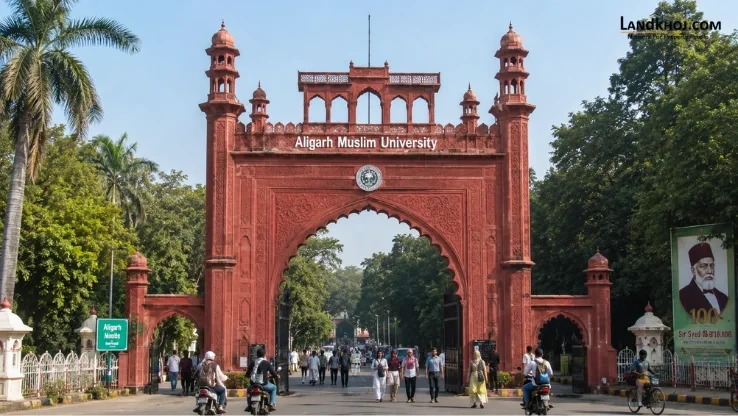
Aligarh City
To understand Aligarh's property market, you need to look at the lock and hardware manufacturing industry here, Aligarh Muslim University, hospitals, the old commercial areas, and the development happening along major roads. Family homes, rental rooms for students, workshops, godowns, showrooms and approved residential plots all have their own place here, serving different needs. Buyers need to understand that the neighbourhoods near AMU, the industrial pockets, the central part of the city, and the newer road corridors being developed are not all the same — each area has its own character.
How Aligarh’s Lock and Hardware Industry Shapes Housing and Commercial Demand
Mostly, the lock and hardware business here is run through a chain of family-run factories, metalworking workshops, wholesalers, traders showrooms , transporters, and storage units. Thanks to this network, there is a constant requirement for worker accommodation, housing for business families, godowns, workshops, and mixed-use buildings. Being near the manufacturing area drastically reduces travel time for owners and workers; but, if you are purchasing a home where your family will live, it is advisable to take into account factors like noise, dust loading activity, road width, and availability of parking. A location that is favorable for business does not necessarily mean a peaceful environment for the family.
How Aligarh Muslim University Influences Rentals, Healthcare and Neighbourhood Choice
AMU's influence isn't limited to student housing alone. Teachers, admin staff, doctors, patients and staff connected with Jawaharlal Nehru Medical College all add to the demand for rental homes and services. Nearby areas have developed private rooms, family rentals, pharmacies, diagnostic centres, food joints and local transport because of this. Property near AMU works well for landlords and for those who want to be close to the institution, but keep in mind — rental turnover, student movement, traffic, parking and road conditions vary a lot from one neighbourhood to another.
The Defence Industrial Corridor and Its Effect on Aligarh’s Outer Growth Areas
With Aligarh being part of the UP Defence Industrial Corridor, there's more attention now on land outside the city, engineering work, logistics and industrial-support property. If development genuinely happens, it could create a need for warehouses, staff housing, roadside services and manufacturing-related spaces. But buyers need to be careful about telling apart what's actually operational from what's just allotted land or a future proposal — that difference matters. Access roads, basic utilities, possession, zoning and what kind of activity is happening nearby all need to be checked on site. Just hearing the name of the corridor doesn't guarantee jobs, rental income or any rise in property value.
Property Activity Along GT Road, Ramghat Road and Major City Corridors
Daily commuting is made easier by GT Road and Ramghat Road, businesses are given more visibility, coming to institutions becomes easier, and lastly, these also led to a growth in residential areas. What you'd find along these connected corridors are plots, independent houses, shops, clinics, offices and showrooms. It is favorable for a business to have a property facing the road though factors like traffic dust drainage, parking setbacks and any plans for road-widening soon, are also significant. Since Aligarh does not have a metro, transportation within the city largely depends on buses, shared transport, private vehicles, roads and train services from Aligarh Junction.
New projects to explore
View all Under Construction
4
Under Construction
4

Emmar Digi
Sector 62, Gurugram, Gurgaon, Haryana
Price
₹45 Lac
 On Going Projects

MANOR ONE
Sector 111, Sector 111, Gurugram
Price
₹1.89 Cr
 Under Construction

Signature Daxin
Sector 36, Gurugram, Gurgaon, Haryana
Price
₹2 Cr
Properties to explore
View all
Living Around Civil Lines, Marris Road, Quarsi and the AMU Area
Every neighbourhood in Aligarh suits a different kind of buyer. Civil Lines has an old, settled feel and easy access to government offices and institutions. Marris Road is useful because of its central location, and it's good for business too since it gets better commercial reach. Quarsi has a wider variety of residential options and everyday markets are close by as well. As for the AMU Area, it works best for those connected with the university or the medical college. Just remember one thing — don't pick an area just by its name or reputation. Compare how far the workplace is, how wide the roads are, where the drainage goes, whether parking is available, whether renting it out will be easy, whether schools, hospitals and markets are nearby, how crowded the neighbourhood is, and whether the papers are in order — only then decide.
How Old Aligarh Markets Support Shops, Workshops and Mixed-Use Properties
Old Aligarh's lock and hardware markets, wholesale businesses, workshops and narrow lanes are where shops, storage units, offices, upper-floor homes and mixed-use properties all operate. Traders and manufacturers benefit because the customer footfall here is already established, but these areas also come with congestion, loading activity, limited parking, old buildings, and difficulty getting a vehicle out during an emergency. If you're buying commercial property in Aligarh, think about what you'll actually use it for, because a busy market area isn't comfortable for a family to live in.
Master Plan 2031, Approved Colonies and Aligarh’s Changing Urban Boundary
The Aligarh Master Plan 2031 is what decides the land use, how roads will be built, how far residential areas will expand, where the industrial zones will be, and where public facilities will come up. Buyers need to understand that having land within the planning boundary, having residential land use, being part of an approved colony, having a sanctioned layout, having an approved building plan, and having a registered sale deed — these are all different things, not the same one. Before buying a plot in Aligarh, check whether it has ADA approval, what the land use is, what the road alignment looks like, what the municipal status is, how much the development charges will be, what the drainage and utilities situation is, and whether building permission has been granted. Just because the master plan mentions an area doesn't mean development will happen there right away.
What Buyers Should Check Before Purchasing Industrial-Side or Outer-City Property in Aligarh
Before buying, check the ownership, look into the title history, confirm whether mutation has been done, make sure there's no encumbrance, verify the khasra-khatauni details, check what the land use and zoning say, confirm ADA approval, check whether the layout is sanctioned, and also look at the Sub-Registrar's records. Inspect whether there's a legal approach road, what the boundary looks like physically, the drainage and sewerage situation, electricity and water supply, parking, and the width of the road. If it's near an industrial area, also check the noise, movement of heavy vehicles, dust and pollution. Just hearing that "AMU is nearby", "the Defence Corridor is coming", "a new road will be built" or "a colony is planned here in future" should never be a reason to skip document verification or a site visit — never do that.
Conclusion
Demand in Aligarh's real estate comes from the lock and hardware industry, AMU, the hospitals, the Defence Industrial Corridor, and the development happening along GT Road and Ramghat Road. Both the older, settled colonies and the newer ones coming up outside offer different residential and commercial options depending on what you need. A site like LandKhoj (https://www.landkhoj.com/) can help with initial research, but the final decision should be based on planning approval, clear title, the actual infrastructure, and the real condition of the site.
FAQs
Is Aligarh City good for buying property?
Yes, Aligarh is good for families, students, university staff, manufacturers, traders and in general anyone who is looking at residential or commercial property linked to local demand.
Which residential areas in Aligarh are commonly considered by families?
Areas around Civil Lines, Marris Road, Quarsi Ramghat Road and the localities near AMU are usually the ones people consider, according to their budget and daily requirements.
How does Aligarh Muslim University affect nearby rental demand?
AMU generates demand for rentals from students, staff doctors and people connected to the institution but the street or locality-wise demand and the condition of the property can vary quite a lot.
Does the lock and hardware industry influence Aligarh real estate?
Yes, there's steady demand here for workshops, godowns, shops, worker accommodation, business-family homes, showrooms and mixed-use properties.
How may the Defence Industrial Corridor affect property activity in Aligarh?
If industrial development genuinely happens, it could increase demand for logistics, warehouses, worker housing and related businesses, but there's no guarantee you'll actually see returns in future.
Is property along GT Road or Ramghat Road suitable for residential use?
Property facing a highway or main road can work, but you should check the traffic, how easy the road access is, the drainage situation, parking, noise levels, whether setbacks have been left, what the land use is, and how much commercial activity is around.
Does Aligarh City have metro connectivity?
No, Aligarh isn't connected with a metro line yet. Traveling here is mainly through roads, buses, shared transports, private vehicles, and railway services.
How can buyers verify whether a colony or plot in Aligarh is approved?
For customers, checking the Master Plan for land use, if ADA approval has been granted, whether the layout is approved, if the building permission has been obtained, what the municipal status is, what the revenue records indicate, and if the registration papers are in order are some of the things to consider.