Introduction
If you're planning to buy a property in India, you've probably come across the terms freehold and leasehold. For many buyers, these terms can be confusing, especially when they are focused on factors like location, price, builder reputation, and amenities.
However, understanding the type of ownership is just as important as choosing the right property. A property may look like a great investment, but if you don't fully understand the ownership structure, it could affect your future rights, resale opportunities, inheritance plans, and even your ability to get a home loan.
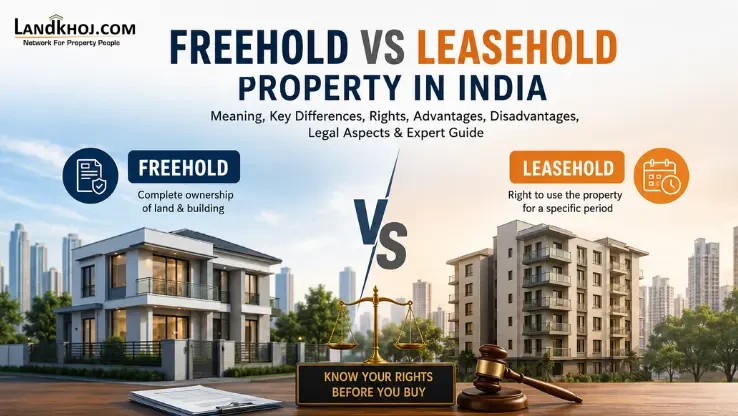
In simple words, a freehold property gives you complete ownership of both the property and the land it stands on. A leasehold property, on the other hand, allows you to use and own the property for a fixed period, while the land remains owned by another party, such as a government authority, development authority, trust, or private owner.
This difference may sound small, but it can have a major impact on:
- Property ownership rights
- Long-term investment value
- Property resale potential
- Home loan approvals
- Inheritance rights
- Future costs and obligations
Many homebuyers, especially first-time buyers, often assume that all properties offer the same ownership rights. Unfortunately, that is not always the case. A leasehold apartment in a prime location may be more affordable than a freehold property, but it may also come with certain restrictions and responsibilities.
In this complete guide, we'll break everything down in simple language. You'll learn:
- What freehold property actually means
- What leasehold property means
- The key differences between freehold and leasehold ownership
- The pros and cons of each option
- Which one is better for investment
- Legal checks you should perform before buying
- Latest trends in the Indian real estate market
Whether you're a first-time homebuyer, an investor, an NRI, or someone planning for long-term family ownership, this guide will help you make a more informed decision.
You'll also find practical examples, comparison tables, expert tips, and answers to common questions that property buyers frequently ask. Platforms such as Landkhoj and Landkhoj.com often highlight the importance of understanding property ownership structures because it plays a major role in the overall value and security of a real estate investment.
Let's start by understanding the basics.
Table of Contents
| No. | Section |
|---|---|
| 1 | What is a Freehold Property? |
| 2 | Freehold Property Meaning |
| 3 | How Freehold Ownership Works |
| 4 | Rights of a Freehold Property Owner |
| 5 | Advantages of Freehold Property |
| 6 | Disadvantages of Freehold Property |
| 7 | What is a Leasehold Property? |
| 8 | Leasehold Property Meaning |
| 9 | How Leasehold Ownership Works |
| 10 | Understanding Lease Periods (30, 60, 90 & 99 Years) |
| 11 | Rights of a Leasehold Property Owner |
| 12 | Advantages of Leasehold Property |
| 13 | Disadvantages of Leasehold Property |
| 14 | Freehold vs Leasehold Property: Key Differences |
| 15 | Ownership Rights Comparison |
| 16 | Property Value and Appreciation |
| 17 | Home Loan and Financing Differences |
| 18 | Property Transfer and Resale |
| 19 | Inheritance and Succession Rights |
| 20 | Freehold vs Leasehold Property Comparison Table |
| 21 | Which Property Type Is Better for Investment? |
| 22 | When Freehold Property Is the Better Choice |
| 23 | When Leasehold Property Is the Better Choice |
| 24 | Freehold vs Leasehold Cost Comparison |
| 25 | Can a Leasehold Property Be Converted into Freehold? |
| 26 | Documents Required for Conversion |
| 27 | Legal Checks Before Buying Any Property |
| 28 | Common Mistakes Property Buyers Make |
| 29 | Latest Freehold vs Leasehold Property Trends in India |
| 30 | Expert Tips for Buyers and Investors |
| 31 | Conclusion |
| 32 | 50 Frequently Asked Questions (FAQs) |
| 33 | Disclaimer |
What is a Freehold Property?
When people buy a property, one of the first things they should understand is the type of ownership attached to it. In India, freehold property is generally considered the most complete form of property ownership because it gives the owner full rights over both the property and the land on which it stands.
Whether you're buying a house, villa, plot, or commercial property, understanding freehold ownership can help you make better long-term decisions regarding investment, resale, and inheritance.
Freehold Property Meaning
A freehold property is a property where the owner has complete and permanent ownership rights over both the building and the land.
In simple terms, once you purchase a freehold property and complete all legal formalities, you become the legal owner of the property without any time restrictions. There is no lease period involved, and you do not need permission from a landlord or government authority to continue owning the property.
Key Features of a Freehold Property
- You own both the land and the structure built on it.
- Ownership remains with you indefinitely.
- The property can be sold, transferred, gifted, or inherited.
- No annual lease rent is payable.
- Fewer ownership restrictions compared to leasehold properties.
- Generally preferred by banks for home loan approvals.
Simple Example
Imagine you buy an independent house built on a freehold plot in Pune. Once the sale deed is registered in your name, you legally own the house as well as the land underneath it.
You can:
- Live in it
- Rent it out
- Sell it
- Pass it on to your children
- Renovate it (subject to local building rules)
without worrying about a lease period expiring.
How Freehold Ownership Works
Freehold ownership is straightforward compared to leasehold ownership.
When a freehold property is sold, ownership rights are transferred completely from the seller to the buyer through a registered sale deed. After registration, the buyer becomes the legal owner of the property.
There is no third-party landowner involved, and ownership does not expire after a fixed number of years.
How the Process Usually Works
- Buyer identifies a freehold property.
- Property documents are verified.
- Sale agreement is signed.
- Payment is completed.
- Sale deed is registered.
- Ownership records are updated in government records.
After these steps, the property legally belongs to the buyer.
Why Buyers Prefer Freehold Ownership
Many buyers feel more secure purchasing freehold properties because:
- Ownership rights are clear.
- There is no uncertainty about lease renewals.
- Future generations can inherit the property easily.
- The property usually enjoys better market demand.
This is one reason why freehold properties often attract strong interest from both homebuyers and investors.
Rights of a Freehold Property Owner
One of the biggest advantages of freehold ownership is the wide range of rights available to the owner.
Since the land and property belong to the owner, they enjoy greater control over the asset.
Major Rights of a Freehold Property Owner
1. Right to Sell
The owner can sell the property whenever they choose.
There is generally no requirement to seek permission from a land authority or lessor before selling.
2. Right to Transfer Ownership
A freehold property can be:
- Gifted to family members
- Transferred through a will
- Passed on through inheritance
- Included in estate planning
3. Right to Rent or Lease
Owners can rent out their property and earn rental income, subject to local regulations.
4. Right to Modify or Renovate
Owners usually have greater flexibility to:
- Renovate interiors
- Expand structures
- Reconstruct buildings
provided they follow municipal and building regulations.
5. Right to Mortgage
Banks and financial institutions generally view freehold properties favorably.
As a result:
- Loan approvals are often easier.
- Higher loan amounts may be available.
- Property valuation tends to be stronger.
6. Long-Term Family Ownership
Many families purchase freehold properties as long-term assets that can be passed down through generations.
This makes freehold ownership attractive for wealth creation and family legacy planning.
Advantages of Freehold Property
Freehold ownership offers several benefits that make it popular among Indian property buyers.
1. Complete Ownership Rights
The biggest benefit is full ownership of both the land and the building.
There is no landlord or authority holding ownership rights over the land.
2. Better Long-Term Investment Potential
Historically, land has been one of the strongest drivers of property value appreciation.
Since freehold owners own the land itself, they often benefit more from long-term market growth.
3. Easier Property Resale
Many buyers actively look for freehold properties because of the ownership advantages they offer.
As a result:
- Buyer demand is often higher.
- Resale transactions can be smoother.
- Marketability tends to improve.
4. Easier Home Loan Approval
Banks usually prefer financing freehold properties because ownership rights are more straightforward.
Benefits may include:
- Faster processing
- Better loan eligibility
- Easier valuation
5. No Lease Expiry Concerns
Unlike leasehold properties, freehold properties do not come with a fixed ownership period.
Owners do not have to worry about:
- Lease renewal
- Lease extension charges
- Declining property value due to a shortening lease term
6. Strong Inheritance Benefits
A freehold property can become a valuable family asset.
It can be:
- Inherited by children
- Transferred through succession
- Used for long-term family wealth preservation
7. Greater Control Over Property Decisions
Owners generally enjoy more flexibility regarding:
- Property use
- Renovations
- Redevelopment opportunities
- Future planning
This level of control is often attractive to both homeowners and investors.
Disadvantages of Freehold Property
Although freehold ownership offers many benefits, it is important to understand that it is not perfect for every buyer.
Like any real estate investment, there are some potential drawbacks.
1. Higher Purchase Price
Freehold properties are often more expensive than comparable leasehold properties.
This is because buyers receive complete ownership rights over the land.
For example:
A leasehold apartment and a freehold apartment in the same locality may have a noticeable price difference due to the ownership structure.
2. Higher Initial Investment
Since freehold properties usually cost more, buyers may need:
- Larger down payments
- Higher loan amounts
- Greater financial commitment
This can make them less accessible for budget-conscious buyers.
3. Responsibility for Maintenance
In many cases, freehold owners bear full responsibility for maintaining the property.
This may include:
- Structural repairs
- Property upkeep
- Boundary walls
- Landscaping
- Utility infrastructure
Depending on the property type, maintenance expenses can increase over time.
4. Higher Property Taxes in Some Cases
Property tax liabilities may vary depending on:
- Property location
- Municipal regulations
- Property size
Owners should factor these costs into their long-term budget.
5. Not Always Available in Prime Locations
In some major Indian cities, especially in older government-developed areas, a large number of properties were originally created on leasehold land.
As a result, buyers seeking prime locations may sometimes find fewer freehold options available.
Quick Summary
A freehold property gives the owner complete ownership rights over both the land and the structure built on it. It offers greater control, stronger inheritance rights, easier resale opportunities, and better long-term investment potential. However, these benefits often come with a higher purchase price and greater financial commitment.
For buyers looking for long-term ownership, family wealth creation, and maximum control over their property, freehold ownership is often considered one of the most secure property ownership types in India.
What is a Leasehold Property?
Not every property in India comes with ownership of the land. In many cities, especially areas developed by government authorities, development authorities, trusts, ports, cantonment boards, and industrial agencies, properties are often sold on a leasehold basis.
This is where many buyers get confused. They may legally own the apartment, house, or commercial unit, but they do not own the land permanently. Instead, they receive the right to use the property for a fixed period under a lease agreement.
Understanding leasehold ownership is extremely important before making a purchase because the remaining lease period, renewal conditions, and ownership restrictions can directly affect the property's value, resale potential, and financing options.
Leasehold Property Meaning
A leasehold property is a property where the buyer gets the right to occupy, use, and enjoy the property for a specified period, while the ownership of the land remains with another party known as the lessor.
The lessor may be:
- A government authority
- A development authority
- A trust
- A private landowner
- An institutional body
The buyer, known as the lessee, receives rights to use the property for a fixed number of years as defined in the lease agreement.
Simple Definition
In simple words:
Freehold = You own the land and the property.
Leasehold = You own the right to use the property for a specific period, but the land belongs to someone else.
Example
Suppose you buy an apartment built on land leased by a development authority for 99 years.
You can:
- Live in the apartment
- Sell your lease rights
- Rent it out
- Transfer it to legal heirs
However, the underlying land still belongs to the authority that granted the lease.
How Leasehold Ownership Works ?
Leasehold ownership operates through a legal agreement between the landowner (lessor) and the buyer or occupant (lessee).
The lease agreement clearly defines:
- Lease duration
- Rights of the lessee
- Restrictions on property use
- Renewal conditions
- Lease rent obligations
- Transfer procedures
The property can often be bought, sold, and financed, but ownership rights are subject to the lease terms.
Typical Leasehold Process
- Land remains owned by the lessor.
- Lease rights are granted for a fixed period.
- The buyer purchases those rights.
- The buyer occupies and uses the property.
- Lease conditions must be followed throughout the lease period.
At the end of the lease period, renewal may be required depending on government policies and lease conditions.
Lease Period Explained (30, 60, 90, 99 Years)
One of the most important factors in a leasehold property is the remaining lease term.
Many buyers see a property advertised as "leasehold" but fail to check how many years remain on the lease. This can significantly affect both value and future resale opportunities.
30-Year Lease
A 30-year lease is relatively short-term.
Characteristics:
- Lower property value compared to freehold
- May face financing challenges
- Limited long-term appreciation
- Buyers often negotiate lower prices
A property with only 20–25 years left on its lease may become difficult to sell.
60-Year Lease
A 60-year lease provides greater security than shorter leases.
Benefits include:
- Better financing options
- More buyer interest
- Longer investment horizon
- Reasonable resale potential
However, buyers should still consider future renewal possibilities.
90-Year Lease
A 90-year lease is often viewed as a long-term ownership arrangement.
Advantages:
- Strong market acceptance
- Better resale prospects
- Easier bank financing
- Long-term occupancy security
For many buyers, a 90-year lease feels similar to ownership because of its long duration.
99-Year Lease
The 99-year lease is one of the most common lease structures in India.
It is frequently found in:
- Government-developed colonies
- Industrial zones
- Commercial developments
- Institutional land developments
Benefits include:
- Long-term usability
- High market acceptance
- Strong financing support
- Better investment attractiveness
However, it is still technically a lease and not permanent ownership.
Why Remaining Lease Period Matters
Two leasehold properties in the same building can have different market values if their remaining lease periods differ significantly.
For example:
| Property | Remaining Lease | Market Perception |
|---|---|---|
| Apartment A | 92 Years | Strong Demand |
| Apartment B | 28 Years | Lower Demand |
This is why buyers should always verify the remaining lease tenure before purchasing.
Rights of a Leasehold Property Owner
Although leasehold ownership does not provide complete ownership of the land, leaseholders still enjoy several important rights.
The exact rights depend on the lease agreement.
Common Rights of Leaseholders
1. Right to Occupy
The leaseholder has the legal right to occupy and use the property during the lease period.
2. Right to Sell Lease Rights
In many cases, leaseholders can transfer or sell their leasehold interest to another buyer.
However, some authorities may require prior approval.
3. Right to Rent Out the Property
Subject to lease conditions, leaseholders can often:
- Rent the property
- Earn rental income
- Enter into tenancy agreements
4. Right to Transfer Through Inheritance
Many leasehold properties can be passed to legal heirs.
However, transfer procedures may vary depending on the authority governing the lease.
5. Right to Mortgage
Banks may finance leasehold properties if:
- The lease period is sufficiently long.
- The title documents are clear.
- The lease conditions permit financing.
Advantages of Leasehold Property
Despite certain limitations, leasehold properties offer several benefits and may be the right choice for specific buyers.
1. Lower Purchase Cost
One of the biggest advantages is affordability.
Leasehold properties are often priced lower than comparable freehold properties in the same area.
This can help buyers enter desirable locations with a smaller budget.
2. Access to Prime Locations
Many premium urban areas were originally developed on leased land.
Examples include:
- Certain government-developed sectors
- Institutional developments
- Business districts
- Industrial estates
As a result, leasehold ownership may provide access to locations where freehold options are limited.
3. Lower Initial Investment
Since purchase prices are often lower:
- Down payments may be smaller.
- Loan amounts may be lower.
- Entry costs can be more manageable.
This can be attractive for first-time buyers.
4. Potential Rental Income
In strong rental markets, leasehold properties can still generate attractive rental returns.
Many tenants focus on:
- Location
- Amenities
- Connectivity
rather than ownership type.
5. Suitable for Medium-Term Investors
Investors planning to hold a property for a limited period may find leasehold ownership practical if the lease duration remains sufficiently long.
Disadvantages of Leasehold Property
Before buying a leasehold property, buyers should also understand the limitations involved.
1. Limited Ownership Rights
The biggest drawback is that the land is not owned by the buyer.
This means ownership rights are not as extensive as those of a freehold property owner.
2. Lease Expiry Concerns
As the lease period gets shorter:
- Property value may decline.
- Financing may become difficult.
- Buyer interest may reduce.
This is a major factor affecting long-term value.
3. Possible Lease Renewal Costs
Lease renewal may involve:
- Administrative procedures
- Government charges
- Additional fees
- Updated lease conditions
The costs can vary significantly.
4. Restrictions on Property Use
Some lease agreements may restrict:
- Structural modifications
- Property usage changes
- Commercial activities
- Redevelopment plans
Buyers should carefully review lease terms.
5. Financing Challenges
Banks often evaluate:
- Remaining lease period
- Ownership clarity
- Renewal conditions
A property with a short remaining lease may face stricter lending requirements.
6. Lower Long-Term Appreciation Potential
In many cases, freehold properties appreciate more strongly over long periods because land ownership contributes significantly to value growth.
Leasehold properties may experience slower appreciation, particularly when the lease term begins to shorten.
Quick Summary
A leasehold property gives the buyer the right to use and occupy a property for a fixed period while the land remains owned by another entity. Leasehold properties are often more affordable and may provide access to premium locations, but they also come with certain restrictions, lease expiry considerations, and potential renewal costs.
For buyers with budget constraints or those seeking property in prime urban locations, leasehold ownership can be a practical option. However, understanding the lease terms and remaining lease period is essential before making any investment decision.
Freehold vs Leasehold Property: Key Differences
Now that we've understood what freehold and leasehold properties are, let's compare them side by side.
This is usually the stage where most buyers start asking practical questions:
- Which ownership type gives me more rights?
- Which one is easier to sell later?
- Will banks approve a loan?
- Which option is better for my family in the long run?
- Which property offers better returns on investment?
The answer depends on your goals, budget, and investment horizon. However, understanding the key differences between freehold and leasehold property can help you make a much more informed decision.
Ownership Rights
Ownership rights are the biggest difference between freehold and leasehold properties.
In a freehold property, you become the complete owner of both the property and the land. There is no time limit on ownership, and you generally have full control over the asset, subject to local laws and regulations.
In a leasehold property, you only own the right to use the property for a specified lease period. The land continues to belong to the original lessor.
Freehold Ownership Rights
- Full ownership of land and structure
- No lease expiry concerns
- Greater control over the property
- Easier transfer of ownership
- Permanent ownership rights
Leasehold Ownership Rights
- Ownership for a fixed period
- Land remains owned by another party
- Rights depend on lease agreement terms
- Certain activities may require approval
- Lease renewal may be necessary in the future
Practical Example
If you own a freehold plot, the land belongs to you permanently.
If you own a leasehold apartment with a 99-year lease, you have rights over the property during the lease period, but the land itself belongs to the authority that issued the lease.
Property Value Appreciation
Many buyers look at property as a long-term investment. Therefore, appreciation potential becomes an important factor.
Generally, freehold properties tend to appreciate better over time because land ownership contributes significantly to value growth.
As cities expand and land becomes scarce, land values often rise substantially.
Why Freehold Properties Often Appreciate More
- Ownership of land adds value
- No lease expiry concerns
- Stronger buyer demand
- Better resale prospects
- Higher long-term investment appeal
Appreciation Challenges for Leasehold Properties
As the lease period decreases:
- Buyer demand may reduce
- Financing options may become limited
- Market value may be affected
For example, a leasehold property with 85 years remaining may attract strong demand, while a similar property with only 25 years remaining could face pricing pressure.
Real-Life Observation
In many Indian cities, freehold residential plots have historically delivered stronger long-term appreciation compared to leasehold properties because buyers place significant value on permanent ownership.
Loan Approval and Financing
Home loan eligibility is another area where ownership type can make a difference.
Most banks and housing finance companies are comfortable financing both freehold and leasehold properties, provided the documentation is clear.
However, freehold properties are often viewed as lower risk from a lender's perspective.
Advantages of Freehold Properties for Financing
- Clear ownership rights
- Strong collateral value
- Easier property valuation
- Better acceptance among lenders
Leasehold Financing Considerations
Banks usually examine:
- Remaining lease period
- Lease agreement terms
- Renewal provisions
- Ownership documentation
A leasehold property with a long remaining tenure may easily qualify for financing.
However, a property with a short remaining lease period may face stricter lending conditions.
Example
A leasehold property with 90 years remaining may receive financing without major issues.
A similar property with only 15–20 years remaining could face loan approval challenges.
Property Transfer Process
Property transfer refers to selling, gifting, or transferring ownership to another person.
The transfer process is usually simpler for freehold properties because the owner has complete ownership rights.
Freehold Property Transfers
Typically involve:
- Sale agreement
- Property registration
- Transfer of ownership records
The process is generally straightforward.
Leasehold Property Transfers
May involve:
- Transfer approvals
- Authority permissions
- Additional documentation
- Transfer charges
Requirements vary depending on the authority controlling the lease.
Why This Matters
Buyers often prefer properties that can be transferred easily.
The simpler the transfer process, the smoother future resale transactions tend to be.
Maintenance and Restrictions
The level of control you have over a property can vary significantly between freehold and leasehold ownership.
Freehold owners generally enjoy greater flexibility regarding property use, renovation, and redevelopment.
Leasehold owners may face certain restrictions imposed by lease agreements.
Common Freehold Benefits
- Greater control over modifications
- Easier redevelopment decisions
- Fewer ownership restrictions
- Long-term planning flexibility
Possible Leasehold Restrictions
Depending on lease terms:
- Structural changes may require approval
- Redevelopment may be restricted
- Commercial use may be regulated
- Land use conditions may apply
Example
A freehold homeowner may have more flexibility when planning major renovations.
A leaseholder may need approval from the relevant authority before undertaking certain structural modifications.
Inheritance and Succession Rights
Many property buyers are not just purchasing for themselves—they are planning for future generations.
Inheritance rights are therefore an important consideration.
Freehold Property Inheritance
Freehold properties are generally easier to transfer to legal heirs because ownership rights are permanent.
Benefits include:
- Straightforward succession planning
- Easier transfer through wills
- Long-term family ownership
- Greater certainty for future generations
Leasehold Property Inheritance
Leasehold properties can also be inherited.
However:
- Transfer procedures may vary
- Authority approvals may sometimes be required
- Remaining lease period becomes an important factor
Family Wealth Perspective
Many families prefer freehold ownership because it allows them to preserve and transfer wealth across generations without worrying about lease expiry.
Resale Potential
Resale value depends on several factors such as location, demand, amenities, and market conditions. However, ownership structure also plays an important role.
Why Freehold Properties Often Have Stronger Resale Demand
- Permanent ownership rights
- Greater buyer confidence
- Better financing availability
- Long-term investment appeal
Leasehold Resale Considerations
Resale demand often depends on:
- Remaining lease tenure
- Lease conditions
- Location quality
- Conversion possibilities
Properties with long lease periods remaining may attract strong buyer interest.
Properties nearing lease expiry may be harder to sell.
Example
A 99-year leasehold apartment in a prime location may outperform a freehold property in a weaker location.
This shows that ownership type is important, but location and market demand still matter significantly.
Long-Term Investment Benefits
For long-term investors, ownership structure can influence future returns and wealth creation.
Freehold Property Advantages for Long-Term Investors
- Permanent ownership
- Better appreciation potential
- Strong inheritance value
- Greater control over the asset
- Better long-term market perception
Leasehold Property Advantages for Certain Investors
- Lower entry cost
- Access to premium locations
- Attractive rental opportunities
- Suitable for medium-term investment strategies
Which One Is Better?
There is no universal answer.
A freehold property is often preferred for:
- Long-term ownership
- Family wealth creation
- Capital appreciation
- Legacy planning
A leasehold property may be suitable for:
- Budget-conscious buyers
- Prime-location purchases
- Investors with shorter holding periods
The best choice depends on your financial goals, investment horizon, and risk tolerance.
Key Takeaway
The difference between freehold and leasehold property goes far beyond ownership terminology. It affects your rights, financing options, inheritance planning, resale opportunities, and long-term investment returns.
In general:
- Freehold properties offer complete ownership, stronger control, and better long-term value.
- Leasehold properties offer affordability and access to prime locations but come with certain limitations and lease-related considerations.
Before making a purchase, buyers should evaluate not just the property's price and location, but also the ownership structure and its long-term implications.
Freehold vs Leasehold Property Comparison Table
Detailed Comparison Between Freehold and Leasehold Property
| Factor | Freehold Property | Leasehold Property |
|---|---|---|
| Ownership of Land | Owner has complete ownership of the land and building. | Land belongs to another party, while the buyer gets usage rights for a fixed period. |
| Ownership Duration | Permanent ownership. | Ownership exists only for the lease term. |
| Control Over Property | Full control, subject to local laws and regulations. | Control may be limited by lease agreement conditions. |
| Property Rights | Extensive ownership rights. | Rights are governed by lease terms. |
| Inheritance Rights | Can be easily passed to future generations. | Can be inherited, but lease conditions continue to apply. |
| Property Transfer | Generally simple and straightforward. | May require approvals from the lessor or authority. |
| Resale Potential | Usually attracts higher buyer interest. | Depends heavily on the remaining lease period. |
| Property Appreciation | Typically stronger long-term appreciation. | Appreciation may be affected as lease duration decreases. |
| Home Loan Eligibility | Generally preferred by banks and lenders. | Financing depends on lease tenure and documentation. |
| Loan Approval Process | Usually easier. | Additional scrutiny may be required. |
| Initial Purchase Cost | Often more expensive. | Usually more affordable. |
| Annual Lease Rent | Not applicable. | May be payable depending on lease terms. |
| Renewal Requirement | No renewal required. | Lease renewal may be required in the future. |
| Risk of Ownership Expiry | No ownership expiry risk. | Ownership rights are linked to lease duration. |
| Flexibility for Renovation | Greater flexibility for modifications and redevelopment. | Certain changes may require approval. |
| Long-Term Family Planning | Suitable for multi-generational ownership. | Depends on remaining lease tenure. |
| Market Demand | Generally enjoys strong demand. | Demand varies based on lease period and location. |
| Commercial Use Flexibility | Usually more flexible. | May be restricted by lease conditions. |
| Investment Potential | Strong for long-term wealth creation. | Suitable for specific investment strategies. |
| Legal Complexity | Relatively simpler ownership structure. | Lease agreements require detailed review. |
Quick Snapshot: Freehold vs Leasehold at a Glance
If you're short on time, here's a simple way to understand the difference:
Choose a Freehold Property If:
- You want complete ownership rights.
- You're planning a long-term investment.
- You want to pass the property to future generations.
- You prefer easier resale and financing.
- You want maximum control over the property.
Choose a Leasehold Property If:
- You have a limited budget.
- The property is in a prime location.
- The remaining lease period is long.
- You're comfortable reviewing lease conditions carefully.
- Your investment horizon is short to medium term.
Which One Do Most Indian Buyers Prefer?
In general, most homebuyers prefer freehold properties because they offer complete ownership and fewer restrictions. This is particularly true for independent houses, residential plots, and long-term family homes.
However, leasehold properties continue to remain popular in many cities because they often provide access to desirable locations at a lower cost. In some government-developed areas, buyers may not even have a freehold alternative available.
This is why the decision should never be based solely on whether a property is freehold or leasehold. Buyers should also consider:
- Location
- Budget
- Future plans
- Remaining lease period
- Financing options
- Expected appreciation
- Legal documentation
A well-located leasehold property with a long lease tenure may be a better choice than a poorly located freehold property.
Key Takeaway
Freehold and leasehold properties serve different purposes. Freehold ownership offers greater security, control, and long-term value, while leasehold ownership can provide affordability and access to premium locations. The right choice depends on your financial goals, investment horizon, and personal requirements.
Which Property Type Is Better for Investment?
One of the most common questions property buyers ask is: "Should I invest in a freehold property or a leasehold property?"
The answer depends on your financial goals, investment horizon, budget, and future plans. There is no one-size-fits-all option. A freehold property may be ideal for one buyer, while a leasehold property could make more sense for another.
Instead of looking at ownership type alone, smart investors evaluate factors such as long-term appreciation, rental income potential, location advantages, financing options, and future resale demand.
Let's look at situations where each option makes the most sense.
When Freehold Property Is a Better Choice
Freehold properties are generally considered the preferred choice for long-term ownership and wealth creation. Since you own both the property and the land permanently, you have greater security and flexibility.
For many Indian families, buying a home is not just about living in it today—it is also about creating an asset that can benefit future generations.
1. Long-Term Investors
If your goal is to hold a property for 10, 20, or even 30 years, a freehold property often makes more sense.
Why?
- Permanent ownership rights
- No lease expiry concerns
- Better long-term appreciation potential
- Stronger buyer demand in future
- Easier inheritance planning
Example
Suppose you purchase a freehold residential plot on the outskirts of Bengaluru.
Over the next 15 years:
- Infrastructure improves.
- Population increases.
- Land becomes scarce.
- Property values rise.
Because you own the land itself, you fully benefit from this appreciation.
This is one reason many experienced investors prefer freehold land investments.
2. End Users Planning to Live Long-Term
If you're buying a home for your family and plan to stay there for many years, freehold ownership provides peace of mind.
You don't have to worry about:
- Lease renewals
- Lease conditions
- Ownership expiry
- Future legal complications related to lease tenure
Benefits for End Users
- Full ownership security
- Greater control over renovations
- Better long-term financial stability
- Easier property transfers
For buyers looking for a "forever home," freehold ownership is often the preferred option.
3. Family Inheritance Planning
Many Indian families view property as a long-term family asset.
Freehold properties fit naturally into this mindset because ownership does not expire.
Advantages for Family Wealth Creation
- Easier succession planning
- Straightforward inheritance process
- Long-term asset preservation
- Greater certainty for future generations
A property purchased today can continue benefiting children and grandchildren decades later.
4. Investors Focused on Capital Appreciation
If your primary goal is property value growth, freehold properties often have an edge.
This is because:
- Land typically appreciates over time.
- Buyers value complete ownership.
- Demand remains strong in many markets.
Although appreciation depends on location and market conditions, freehold properties generally perform well over long investment periods.
When Leasehold Property Is a Better Choice
While freehold ownership has many advantages, leasehold properties should not automatically be dismissed.
In certain situations, they can offer excellent value and investment opportunities.
1. Lower Budget Buyers
One of the biggest advantages of leasehold property is affordability.
In many cities, a leasehold property may cost significantly less than a similar freehold property.
Why This Matters
Lower purchase prices can mean:
- Smaller down payments
- Lower home loan requirements
- Reduced financial pressure
- Easier market entry
Example
A buyer may find:
- A freehold apartment for ₹1.2 crore
- A similar leasehold apartment for ₹95 lakh
For many families, this price difference can be substantial.
2. Buyers Seeking Prime Locations
Some of India's most desirable locations include properties built on leased land.
Examples can include:
- Government-developed sectors
- Institutional land developments
- Business districts
- Certain commercial hubs
In these cases, leasehold ownership may provide access to locations that would otherwise be financially out of reach.
Practical Reality
Many buyers prioritize:
- Location
- Connectivity
- Schools
- Employment opportunities
over ownership structure alone.
A well-located leasehold property can sometimes outperform a freehold property located in a weaker market.
3. Short-to-Medium-Term Investors
Not every investor plans to hold property for decades.
Some investors focus on:
- Rental income
- Market cycles
- Medium-term appreciation
- Portfolio diversification
For these buyers, leasehold ownership may be perfectly acceptable, especially when the remaining lease period is long.
Example
An investor purchasing a leasehold commercial unit with 85 years remaining on the lease may still enjoy:
- Rental income
- Capital appreciation
- Good resale opportunities
during their planned investment period.
4. Commercial Property Investors
In some commercial markets, leasehold properties are common.
Investors often focus more on:
- Business activity
- Rental yield
- Tenant demand
- Location advantages
than on ownership structure.
If a property generates strong cash flow, a leasehold structure may not significantly impact investment performance in the short or medium term.
Investment Comparison: Freehold vs Leasehold
| Investment Factor | Freehold Property | Leasehold Property |
|---|---|---|
| Long-Term Appreciation | Excellent | Moderate to Good |
| Family Wealth Creation | Strong | Limited by lease term |
| Rental Income Potential | Good | Good |
| Initial Investment Required | Higher | Lower |
| Resale Demand | Usually Stronger | Depends on lease period |
| Financing Availability | Better | Depends on lease conditions |
| Risk Level | Lower | Higher due to lease-related factors |
| Wealth Preservation | Excellent | Moderate |
| Prime Location Access | Sometimes Limited | Often Better |
| Flexibility | High | Moderate |
Real-Life Buyer Scenarios
Scenario 1: First-Time Homebuyer
Rahul is purchasing his first home for his family and plans to live there for the next 20 years.
Better Option: Freehold Property
Reason:
- Long-term ownership
- Family security
- Better inheritance benefits
- Strong appreciation potential
Scenario 2: Budget-Conscious Buyer
Priya wants to buy a property in a prime urban location but has a limited budget.
Better Option: Leasehold Property
Reason:
- Lower entry cost
- Access to preferred location
- Long lease period may still provide strong value
Scenario 3: Long-Term Investor
Amit wants to build wealth through land ownership and hold property for decades.
Better Option: Freehold Property
Reason:
- Complete ownership rights
- Better appreciation potential
- Long-term wealth creation
Scenario 4: Commercial Investor
Neha wants to buy office space in a well-established business district.
Better Option: Depends on rental yield and lease duration
Reason:
- Location and income may matter more than ownership structure
- A long lease period may still offer attractive returns
Key Takeaway
If your goal is long-term ownership, family wealth creation, inheritance planning, and maximum control over the property, a freehold property is usually the better investment choice.
However, if you're working with a limited budget, want access to a prime location, or have a shorter investment horizon, a leasehold property can still be a smart and practical option, provided the lease terms are carefully reviewed.
The best investment decision is not simply about choosing freehold or leasehold. It is about selecting the option that aligns with your financial goals, risk tolerance, and long-term plans.
Conclusion
Understanding the difference between freehold and leasehold property is important before making any property purchase. While freehold properties offer complete ownership and long-term security, leasehold properties can be a practical option for buyers looking for affordability or access to prime locations.
The right choice depends on your budget, future plans, and investment goals. Before making a decision, always check the ownership structure, understand your rights, and evaluate the property's long-term value. A little research today can help you make a smarter and more confident property investment tomorrow.
Frequently Asked Questions (FAQs)
-
What is a freehold property?
A freehold property gives the owner complete and permanent ownership of both the land and the building. The owner has full rights to sell, transfer, inherit, or mortgage the property.
-
What is a leasehold property?
A leasehold property allows the buyer to use and occupy the property for a fixed period, while the ownership of the land remains with another party such as a government authority, trust, or private owner.
-
What is the difference between freehold and leasehold property?
The main difference is ownership. In a freehold property, you own both the land and the building permanently. In a leasehold property, you only have rights to use the property for a specified lease period.
-
Is freehold property better than leasehold property?
Freehold property is generally preferred for long-term ownership because it offers complete ownership rights, better resale value, and stronger inheritance benefits. However, leasehold properties can be suitable for buyers with budget constraints.
-
Why are leasehold properties usually cheaper?
Leasehold properties are often less expensive because buyers do not receive permanent ownership of the land. This makes them more affordable compared to similar freehold properties.
-
Can a leasehold property be sold?
Yes, most leasehold properties can be sold or transferred to another buyer, subject to the conditions mentioned in the lease agreement.
-
Can leasehold property be inherited?
Yes, leasehold properties can generally be inherited by legal heirs, although the remaining lease period and lease conditions will continue to apply.
-
Do banks provide home loans for leasehold properties?
Yes, many banks provide home loans for leasehold properties, especially when the remaining lease tenure is long and the documentation is clear.
-
Which property type offers better appreciation?
Freehold properties often have stronger long-term appreciation potential because the owner also owns the land, which tends to increase in value over time.
-
What does freehold property meaning refer to?
Freehold property meaning refers to complete ownership of both the property and the land without any lease restrictions or time limitations.
-
What is leasehold meaning in real estate?
Leasehold meaning refers to the right to occupy and use a property for a specific lease term while the land remains owned by another party.
-
Is a 99-year lease considered a long lease?
Yes, a 99-year lease is generally considered a long-term lease and is one of the most common lease arrangements in the real estate market.
-
Which property type is better for long-term investment?
Freehold property is usually considered a better option for long-term investment due to permanent ownership, better appreciation potential, and easier inheritance planning.
-
Are freehold properties easier to resell?
In most cases, yes. Buyers often prefer freehold properties because they provide complete ownership rights and fewer legal restrictions.
-
Can leasehold properties generate rental income?
Yes, leasehold properties can be rented out and may generate rental income, provided the lease agreement allows it.
-
Is a leasehold property a bad investment?
No. A leasehold property in a prime location with a long remaining lease period can still be a valuable investment and offer good rental returns.
-
What rights does a freehold property owner have?
A freehold owner has the right to sell, transfer, mortgage, rent, renovate, and pass the property to future generations.
-
What rights does a leasehold property owner have?
Leasehold owners generally have the right to occupy, use, transfer, and inherit the property, subject to the terms of the lease agreement.
-
Which property type is better for family inheritance?
Freehold properties are usually better for inheritance planning because ownership is permanent and can be easily transferred to legal heirs.
-
How do I choose between freehold and leasehold property?
You should consider your budget, investment goals, ownership preferences, location requirements, and long-term plans before deciding between freehold and leasehold property.