Introduction
In the first part of our guide, we explored the meaning of freehold and leasehold property, ownership rights, key differences, and which option may be better for investment. However, understanding ownership is only one part of making a smart property decision.
Before buying any property, it is equally important to verify legal documents, understand lease conversion rules, and avoid common mistakes that many buyers make. These factors can directly affect your property's future value, resale potential, and legal security.
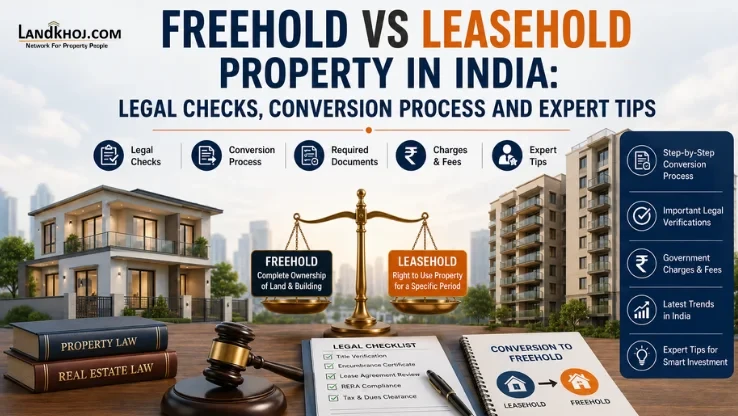
In this guide, we'll discuss how leasehold properties can be converted into freehold ownership, the legal checks every buyer should perform, common pitfalls to avoid, and the latest trends shaping the Indian real estate market.
If you haven't read Part 1 yet, we recommend starting there to understand the fundamentals of freehold and leasehold ownership.
Table of Contents
| S.No. | Topic |
|---|---|
| 1 | Can a Leasehold Property Be Converted into Freehold? |
| 2 | Leasehold to Freehold Conversion Process |
| 3 | Documents Required for Leasehold to Freehold Conversion |
| 4 | Government Charges and Fees for Property Conversion |
| 5 | Benefits of Converting Leasehold Property into Freehold |
| 6 | Legal Aspects to Check Before Buying Property |
| 7 | Verify Ownership Documents |
| 8 | Check Remaining Lease Period |
| 9 | Review Lease Agreement Terms |
| 10 | RERA Compliance Verification |
| 11 | Encumbrance Certificate Verification |
| 12 | Common Mistakes Property Buyers Make |
| 13 | Ignoring Remaining Lease Duration |
| 14 | Not Checking Renewal Clauses |
| 15 | Assuming Leasehold Equals Full Ownership |
| 16 | Skipping Legal Verification |
| 17 | Focusing Only on Property Price |
| 18 | Freehold vs Leasehold Property in India: Latest Trends |
| 19 | Demand Trends in Major Indian Cities |
| 20 | Impact on Property Prices |
| 21 | Government Policies Affecting Property Ownership |
| 22 | Expert Tips Before Choosing Between Freehold and Leasehold Property |
| 23 | Tips for First-Time Homebuyers |
| 24 | Tips for Property Investors |
| 25 | Tips for NRI Buyers |
| 26 | Tips for Commercial Property Buyers |
| 27 | Conclusion |
| 28 | Frequently Asked Questions (FAQs) |
Freehold vs Leasehold: Cost Comparison
For many property buyers, the final decision often comes down to one simple question:
"Which option will cost me less in the long run?"
At first glance, leasehold properties may appear more affordable because their purchase prices are often lower than comparable freehold properties. However, the overall cost of ownership involves much more than the initial purchase price.
When comparing freehold and leasehold properties, buyers should look at:
- Initial purchase cost
- Registration expenses
- Home loan requirements
- Annual lease rent
- Maintenance charges
- Future conversion costs
- Long-term appreciation potential
A property that looks cheaper today may not always be the most cost-effective choice over the next 20–30 years.
Initial Purchase Cost
The purchase price is usually the first factor buyers compare.
In most cases, freehold properties are more expensive than leasehold properties in the same area because buyers receive complete ownership of both the land and the structure.
Why Freehold Properties Cost More
The additional cost comes from:
- Permanent land ownership
- Greater ownership rights
- Better long-term value
- Stronger market demand
- Higher resale potential
Why Leasehold Properties Are Often Cheaper
Since the land remains owned by another entity, buyers are primarily paying for the right to use the property during the lease period.
This often results in:
- Lower acquisition costs
- Better affordability
- Easier entry into premium locations
Example
Imagine two similar apartments in the same locality:
| Property Type | Approximate Price |
|---|---|
| Freehold Apartment | ₹1.20 Crore |
| Leasehold Apartment | ₹95 Lakh |
The leasehold property may appear more attractive from a budget perspective, especially for first-time buyers.
However, purchase price should not be the only factor influencing your decision.
Registration Charges and Stamp Duty
Every property transaction involves registration charges and stamp duty as per state government rules.
The exact rates vary across states, but ownership structure can sometimes influence documentation requirements.
For Freehold Properties
Typically, buyers need:
- Sale deed registration
- Stamp duty payment
- Registration fees
The process is generally straightforward.
For Leasehold Properties
Additional documents may include:
- Lease agreement
- Transfer permissions
- Authority approvals
- Lease transfer documentation
The exact requirements depend on the authority governing the lease.
Important Point
Registration expenses vary significantly between states and cities. Buyers should always verify current government rates before calculating total acquisition costs.
Annual Lease Rent
One of the major differences between freehold and leasehold ownership is the possibility of recurring lease-related payments.
Freehold Property
Freehold owners generally do not pay annual lease rent because they own the land outright.
Their recurring obligations are usually limited to:
- Property taxes
- Society maintenance charges
- Utility expenses
Leasehold Property
Depending on lease conditions, leaseholders may be required to pay:
- Annual ground rent
- Lease rent
- Periodic renewal fees
These charges vary widely depending on:
- Location
- Landowner
- Lease terms
- Government policies
Why This Matters
While annual lease rent may seem small initially, the cumulative cost over many years can become significant.
Before purchasing a leasehold property, buyers should carefully understand:
- Current lease rent
- Future escalation clauses
- Renewal charges
Maintenance Costs
Many buyers assume maintenance costs are determined solely by ownership type. In reality, maintenance expenses depend more on the type of property than whether it is freehold or leasehold.
However, there can still be some differences.
Freehold Property Maintenance
Owners are generally responsible for:
- Structural repairs
- Property upkeep
- Landscaping
- Boundary walls
- Utility infrastructure
For independent houses and plots, maintenance responsibility is often entirely with the owner.
Leasehold Property Maintenance
Maintenance arrangements depend on:
- Lease conditions
- Housing society rules
- Development authority guidelines
In apartments and commercial complexes, maintenance is often handled collectively through society or facility management charges.
Practical Example
A freehold villa owner may bear the full cost of roof repairs and exterior maintenance.
A leasehold apartment owner may only contribute through society maintenance fees.
Future Appreciation Potential
Cost comparison should never focus only on what you spend today.
It should also consider what the property may be worth in the future.
Freehold Properties and Appreciation
Freehold properties often benefit from:
- Land appreciation
- Higher buyer demand
- Permanent ownership value
- Better long-term investment appeal
Over long periods, the value of the land itself can contribute significantly to overall returns.
Leasehold Properties and Appreciation
Leasehold properties can also appreciate, especially in high-demand locations.
However, appreciation may be influenced by:
- Remaining lease period
- Lease renewal prospects
- Market perception
- Financing availability
As lease tenure shortens, appreciation potential may become more limited.
Home Loan Cost Considerations
Most buyers finance property purchases through home loans.
Ownership structure can affect borrowing costs and eligibility.
Freehold Properties
Advantages often include:
- Easier valuation
- Wider lender acceptance
- Strong collateral value
- Smoother loan approval process
Leasehold Properties
Banks may examine:
- Remaining lease duration
- Lease conditions
- Transfer restrictions
- Renewal provisions
A long lease term usually supports financing, while shorter leases may lead to stricter lending criteria.
Potential Lease Renewal Costs
This is a factor many buyers overlook when purchasing leasehold properties.
If the lease requires renewal in the future, costs may include:
- Administrative fees
- Government charges
- Conversion fees
- Legal expenses
The amount varies significantly depending on the authority and applicable policies.
Why Buyers Should Check This
A property with a short remaining lease period may eventually require substantial expenditure to extend or renew the lease.
Understanding these future obligations is important before making a purchase decision.
Long-Term Ownership Cost Comparison
Let's compare the broader picture.
| Cost Factor | Freehold Property | Leasehold Property |
|---|---|---|
| Initial Purchase Cost | Higher | Lower |
| Stamp Duty & Registration | Standard | May involve additional documentation |
| Annual Lease Rent | Not Applicable | May Apply |
| Lease Renewal Charges | Not Applicable | Possible |
| Maintenance Responsibility | Often Higher for independent properties | Depends on lease and society rules |
| Financing Ease | Generally Better | Depends on lease tenure |
| Long-Term Appreciation | Usually Stronger | Depends on lease duration |
| Future Ownership Costs | Relatively Predictable | May include lease-related expenses |
Which Option Is More Cost-Effective?
The answer depends on your goals.
A Freehold Property May Be More Cost-Effective If:
- You plan to hold the property long-term.
- You want stronger appreciation potential.
- You want complete ownership rights.
- You prefer avoiding lease-related costs and uncertainty.
A Leasehold Property May Be More Cost-Effective If:
- Your budget is limited.
- The property is in a premium location.
- The lease period is long.
- You are comfortable with lease conditions.
Example
A buyer purchasing a leasehold property at a significantly lower price may save lakhs of rupees upfront.
On the other hand, a buyer purchasing a freehold property may benefit from stronger long-term appreciation and fewer ownership-related uncertainties.
The better choice depends on whether you prioritize affordability today or ownership advantages over the long run.
Key Takeaway
When comparing freehold and leasehold properties, don't focus solely on the purchase price. Consider the complete cost of ownership, including financing, lease obligations, maintenance, future appreciation, and long-term flexibility.
A leasehold property may offer lower upfront costs, while a freehold property often provides stronger long-term value and greater ownership security. Evaluating both the immediate and future financial impact will help you make a more informed property-buying decision.
Can a Leasehold Property Be Converted into Freehold?
One of the most common questions property buyers ask is:
"If I buy a leasehold property today, can I convert it into a freehold property later?"
In many cases, the answer is yes. Certain leasehold properties in India can be converted into freehold ownership, subject to government policies, authority rules, eligibility criteria, and payment of applicable charges.
This possibility is one reason why some buyers are comfortable purchasing leasehold properties, especially when they are located in desirable areas. However, the conversion process is not automatic and varies from one authority to another.
Before buying a leasehold property, it is important to understand whether conversion is allowed and what it may cost in the future.
What Does Leasehold to Freehold Conversion Mean?
Leasehold-to-freehold conversion means changing the ownership status of a property from limited lease rights to full ownership rights.
After successful conversion:
- The property owner gains ownership of the land.
- Lease-related restrictions are removed.
- No future lease renewal is required.
- Property ownership becomes permanent.
- Resale and inheritance often become easier.
In simple terms, the owner moves from being a leaseholder to becoming a full owner.
Why Do Property Owners Convert Leasehold Properties?
Many property owners choose conversion because they want greater ownership security and long-term flexibility.
Common Reasons for Conversion
- Permanent ownership rights
- Better resale value
- Easier property transfers
- Improved market demand
- Higher buyer confidence
- Simplified inheritance planning
- Easier financing options
In many markets, freehold properties are viewed more favorably by buyers and lenders, which can improve future transaction opportunities.
Is Conversion Possible for Every Leasehold Property?
No.
Not all leasehold properties are eligible for conversion.
The possibility of conversion depends on factors such as:
- The authority that owns the land
- Government policies
- Property category
- Lease conditions
- Applicable regulations
Examples of Authorities That May Allow Conversion
Depending on prevailing policies, conversion may sometimes be available for properties under:
- Development authorities
- Housing boards
- Government agencies
- Municipal bodies
- Certain institutional landowners
However, rules can change over time, so buyers should always verify current regulations before assuming conversion is possible.
Leasehold to Freehold Conversion Process
The exact procedure varies across authorities and states, but the overall process generally follows a similar pattern.
Step 1: Verify Eligibility
Before starting the process, confirm whether the property qualifies for conversion.
This usually involves checking:
- Property records
- Lease conditions
- Government guidelines
- Authority regulations
Why This Step Matters
Some buyers assume every leasehold property can become freehold, which is not always true.
Verifying eligibility at the beginning can save time and unnecessary expenses.
Step 2: Collect Required Documents
The authority will usually require supporting documents to establish ownership and verify property details.
The exact list may vary, but documentation is an important part of the process.
Step 3: Submit Application
The property owner submits a conversion application to the relevant authority.
The application generally includes:
- Ownership details
- Property information
- Supporting documents
- Applicable fees
Authorities then review the request and verify compliance with conversion rules.
Step 4: Payment of Conversion Charges
If the application is approved, the owner must pay the prescribed conversion charges.
The amount can vary significantly depending on:
- Property size
- Location
- Land value
- Authority regulations
- Government policies
This is often the most important financial component of the conversion process.
Step 5: Verification and Approval
The authority may conduct:
- Document verification
- Property verification
- Ownership checks
- Compliance review
Once satisfied, approval is granted.
Step 6: Issue of Freehold Documents
After approval and payment completion, the authority issues documents confirming the property's freehold status.
Ownership records are updated accordingly.
At this point, the property generally enjoys the same ownership benefits as other freehold properties.
Required Documents for Conversion
Documentation requirements can differ depending on the authority and property type.
However, the following documents are commonly requested.
Typical Documents Required
- Original lease deed
- Sale deed (if applicable)
- Possession documents
- Property tax receipts
- Identity proof
- Address proof
- Encumbrance-related documents
- No-objection certificates (where required)
- Application forms prescribed by the authority
Important Tip
Always verify the latest document requirements directly with the concerned authority because procedures may change over time.
Government Charges and Fees
One of the most important considerations during conversion is the cost involved.
Factors Affecting Conversion Charges
Authorities may calculate charges based on:
- Circle rate
- Land value
- Property size
- Location category
- Property usage (residential or commercial)
- Government guidelines
Additional Expenses May Include
- Processing fees
- Documentation charges
- Legal expenses
- Registration fees
- Professional assistance fees
Because costs vary widely, buyers should estimate the financial impact before initiating conversion.
Benefits of Converting Leasehold Property into Freehold
Conversion can provide several long-term advantages.
1. Permanent Ownership Rights
This is the biggest benefit.
The owner gains complete ownership of both the property and the land.
There is no need to worry about lease expiry or renewal.
2. Better Resale Value
Many buyers actively prefer freehold properties.
As a result:
- Market demand may increase.
- Buyer confidence improves.
- Future resale opportunities may become easier.
3. Easier Property Transfer
Freehold properties generally involve fewer ownership-related restrictions.
This can simplify:
- Property sales
- Family transfers
- Gift deeds
- Succession planning
4. Improved Financing Options
Banks often view freehold properties more favorably.
Benefits may include:
- Easier loan approvals
- Better valuation
- Stronger collateral acceptance
5. Stronger Long-Term Appreciation Potential
Freehold ownership often contributes positively to property value because buyers place significant importance on permanent land ownership.
This can support stronger appreciation over time.
6. Better Inheritance Planning
Many families prefer freehold ownership because it makes long-term succession planning simpler.
Property can be passed on without concerns regarding future lease renewals.
Things Buyers Should Check Before Purchasing a Leasehold Property
If you're considering a leasehold property because of its affordability or location advantages, make sure to investigate conversion possibilities beforehand.
Ask These Questions
- Is conversion allowed?
- Has the authority previously approved conversions?
- What are the likely costs?
- What documents will be required?
- How many years remain on the lease?
- Are there any pending disputes?
- Are there restrictions on transfer or redevelopment?
Getting answers to these questions can help you avoid surprises later.
Real-Life Example
Imagine two similar apartments in the same neighborhood.
Apartment A
- Freehold
- Price: ₹1.25 Crore
Apartment B
- Leasehold
- Price: ₹1.05 Crore
- Eligible for freehold conversion
Some buyers may choose Apartment B because:
- Initial cost is lower.
- Conversion remains possible.
- Future ownership benefits can still be achieved.
However, the decision should always be based on a detailed financial and legal evaluation.
Key Takeaway
Yes, many leasehold properties in India can be converted into freehold properties, but eligibility depends on the governing authority, lease conditions, and applicable regulations. The process usually involves document verification, application submission, payment of conversion charges, and approval from the concerned authority.
Before purchasing a leasehold property, buyers should always verify whether conversion is possible and estimate the associated costs. A property that offers future conversion potential may provide a balance between affordability today and stronger ownership rights in the future.
Legal Aspects to Check Before Buying
Buying a property is not just a financial decision—it is also a legal commitment. Whether you're purchasing a freehold or leasehold property, skipping legal verification can lead to costly disputes, ownership issues, loan complications, or future resale problems.
Many buyers spend weeks comparing locations, builders, and prices but fail to examine the legal status of the property. This is one of the biggest mistakes anyone can make in real estate.
A property may look perfect on paper, but if the ownership documents are unclear or legal approvals are missing, it can create serious problems later.
Before making any purchase decision, here are the key legal checks every buyer should perform.
Verify Ownership Documents
The first step in any property transaction is confirming that the seller actually has the legal right to sell the property.
This may sound obvious, but ownership disputes are more common than many buyers realize.
What You Should Check
- Sale deed
- Conveyance deed
- Title documents
- Mutation records
- Property tax records
- Previous ownership history
These documents help establish the chain of ownership and confirm that the seller is the lawful owner.
Why It Matters
If ownership records are incomplete or disputed, the buyer may face:
- Legal claims
- Ownership disputes
- Registration issues
- Financing difficulties
Practical Tip
Always verify ownership documents through a qualified property lawyer before making any payment.
A small legal fee today can save significant trouble later.
Check Remaining Lease Period
This step is especially important when buying a leasehold property.
Many buyers focus on location and price but forget to check how many years remain on the lease.
The remaining lease period can significantly impact:
- Property value
- Home loan eligibility
- Future resale opportunities
- Long-term investment returns
Questions to Ask
- When did the lease start?
- How many years remain?
- Is lease renewal possible?
- What are the renewal conditions?
- Are there any upcoming lease-related obligations?
Example
Two similar apartments may look identical.
However:
- Apartment A has 92 years remaining.
- Apartment B has only 22 years remaining.
The legal and financial value of these two properties can be very different.
Review Lease Agreement Terms
If the property is leasehold, carefully read the lease agreement before making any commitment.
Many buyers assume all lease agreements are similar, but the conditions can vary significantly.
Key Clauses to Review
- Lease duration
- Renewal provisions
- Transfer conditions
- Usage restrictions
- Redevelopment rights
- Subletting rules
- Ground rent obligations
Why This Is Important
Certain lease agreements may restrict:
- Commercial activities
- Structural changes
- Property transfers
- Redevelopment projects
Understanding these restrictions beforehand helps avoid future surprises.
RERA Compliance Verification
The Real Estate (Regulation and Development) Act, commonly known as RERA, was introduced to improve transparency and protect buyers.
For under-construction properties, RERA verification is an important step.
What You Should Verify
- Project registration status
- Builder registration details
- Project approvals
- Delivery timelines
- Legal approvals
Benefits of Checking RERA
- Greater transparency
- Better access to project information
- Reduced risk of project delays
- Improved buyer protection
Practical Tip
Always cross-check project details through the relevant state RERA authority before investing in an under-construction project.
Encumbrance Certificate Verification
An Encumbrance Certificate (EC) helps determine whether the property is free from legal and financial liabilities.
It is one of the most important documents buyers should review.
What an Encumbrance Certificate Shows
- Existing mortgages
- Loans against the property
- Legal claims
- Registered transactions
- Financial liabilities
Why It Matters
A property with unresolved financial obligations may create complications for the new owner.
Verifying the EC helps ensure that the property has a clear transaction history.
Check Property Tax Records
Property tax records can reveal valuable information about the property's legal standing.
Verify
- Property tax payments
- Outstanding dues
- Municipal records
- Ownership details
Why This Matters
Unpaid taxes may result in future liabilities for the buyer.
Ensuring all dues are cleared before purchase is a basic but important precaution.
Verify Building Approvals and Sanctions
For constructed properties, buyers should confirm that the building has received all required approvals.
Documents to Check
- Building plan approval
- Occupancy certificate
- Completion certificate
- Municipal approvals
- Land-use permissions
Risks of Ignoring This Step
Unauthorized construction can lead to:
- Penalties
- Demolition notices
- Financing challenges
- Resale difficulties
Confirm Land Use Classification
This is particularly important when purchasing plots, agricultural land, or commercial property.
Verify Whether the Land Is Classified As
- Residential
- Commercial
- Industrial
- Agricultural
- Mixed-use
Why It Matters
Using land for purposes not permitted under local regulations can result in legal complications.
For example, building a commercial establishment on land designated solely for residential use may violate local planning regulations.
Check for Pending Litigation
A property involved in legal disputes can become a major headache for buyers.
Ask About
- Ownership disputes
- Court cases
- Family claims
- Boundary disputes
- Government notices
Practical Advice
A legal search conducted by an experienced property lawyer can help identify potential issues before the transaction is completed.
Verify Society and Authority Records
For apartments and gated communities, buyers should also review records maintained by the housing society or development authority.
Check For
- Outstanding maintenance dues
- Transfer fees
- Society approvals
- Occupancy status
- Building compliance
Why It Matters
Pending dues or compliance issues may affect future ownership transfers.
Home Loan Approval Is Not a Complete Legal Guarantee
Many buyers assume that if a bank approves a home loan, all legal checks have already been completed.
This is a common misconception.
While lenders conduct their own due diligence, buyers should still perform independent verification.
Remember
Bank approval does not replace:
- Personal legal review
- Document verification
- Ownership checks
- Lease verification
Always conduct your own investigation.
Buyer Precautions Before Signing Any Agreement
Before signing a booking form, agreement, or sale deed, take a moment to review everything carefully.
Essential Precautions
- Verify ownership documents.
- Review lease terms thoroughly.
- Confirm RERA registration.
- Check the Encumbrance Certificate.
- Ensure taxes are paid.
- Verify approvals and permissions.
- Review society records.
- Consult a property lawyer.
Rushing through these steps can create expensive problems later.
Common Legal Red Flags
Be cautious if you notice any of the following:
🚩 Seller avoids sharing documents.
🚩 Ownership records are incomplete.
🚩 Property price appears unusually low.
🚩 Lease details are unclear.
🚩 Ongoing litigation exists.
🚩 Tax dues remain unpaid.
🚩 Approvals are missing.
🚩 Seller pressures you to make quick payments.
If something feels unclear, pause and investigate further before proceeding.
Key Takeaway
Whether you're buying a freehold or leasehold property, legal verification is one of the most important parts of the purchase process. Ownership documents, lease terms, RERA compliance, Encumbrance Certificates, tax records, and building approvals should all be carefully reviewed before committing to a transaction.
A legally sound property not only protects your investment but also makes future financing, resale, and inheritance much easier. Taking the time to conduct proper due diligence today can save years of legal and financial trouble in the future.
Common Mistakes Buyers Make
Buying a property is an exciting milestone, but it can also be overwhelming. Between comparing locations, negotiating prices, arranging financing, and completing paperwork, many buyers overlook important details that can affect their investment in the long run.
When it comes to freehold and leasehold properties, even experienced buyers sometimes make costly mistakes. These mistakes may not seem significant during the purchase process, but they can create legal, financial, and resale challenges later.
The good news is that most of these issues can be avoided with proper research and due diligence.
Let's look at some of the most common mistakes property buyers make and how you can avoid them.
Ignoring the Remaining Lease Duration
This is probably the most common mistake buyers make when purchasing a leasehold property.
Many people see an attractive property in a good location and assume the ownership structure won't make much difference. They focus on the purchase price but forget to check how many years remain on the lease.
Why This Can Be a Problem
The remaining lease period directly affects:
- Property value
- Resale potential
- Home loan eligibility
- Future market demand
A leasehold property with a long remaining tenure is usually easier to finance and sell than one approaching lease expiry.
Example
Imagine buying a property with only 20 years left on the lease because it seemed like a great deal.
A few years later, when you try to sell it, you may discover:
- Fewer interested buyers
- Lower market value
- Difficulty finding lenders for prospective buyers
What You Should Do
Always verify:
- Total lease period
- Remaining lease duration
- Renewal eligibility
- Renewal costs
Never assume these details are unimportant.
Not Checking Renewal Clauses
Many buyers verify the lease period but fail to review the renewal terms.
This can be a costly oversight.
Why Renewal Clauses Matter
A lease may:
- Allow renewal
- Restrict renewal
- Require specific approvals
- Involve substantial fees
Without understanding these conditions, buyers may face unexpected expenses in the future.
Questions to Ask
- Can the lease be renewed?
- Who approves the renewal?
- What are the costs?
- Are there any restrictions?
Practical Tip
Review renewal clauses carefully with the help of a legal professional before finalizing the purchase.
Assuming Leasehold Equals Full Ownership
Another common misunderstanding is believing that a leasehold property offers the same ownership rights as a freehold property.
Many first-time buyers are unfamiliar with the distinction and only discover the limitations later.
The Reality
In a leasehold property:
- The land belongs to another party.
- Ownership rights are subject to lease terms.
- Certain activities may require approval.
- Lease expiry remains a consideration.
Why This Matters
Understanding the limits of your ownership rights helps you make informed decisions regarding:
- Renovation plans
- Resale expectations
- Long-term investment goals
Key Reminder
Leasehold ownership can still be valuable, but it is not the same as permanent land ownership.
Skipping Legal Verification
Some buyers rely entirely on verbal assurances from sellers, brokers, or developers without independently verifying documents.
This is one of the riskiest mistakes in real estate.
Risks of Skipping Legal Checks
- Ownership disputes
- Undisclosed liabilities
- Financing complications
- Future legal challenges
Documents That Should Always Be Verified
- Sale deed
- Lease deed
- Title documents
- Encumbrance Certificate
- Property tax records
- Building approvals
Real-Life Lesson
A property may appear attractive and reasonably priced, but unresolved legal issues can quickly turn it into a financial burden.
Professional legal verification is always worth the investment.
Focusing Only on Price
Many buyers make decisions based solely on the purchase price.
While affordability is important, the cheapest property is not always the best value.
Factors That Matter Beyond Price
- Ownership type
- Location
- Lease tenure
- Appreciation potential
- Legal status
- Future market demand
Example
A leasehold property priced significantly lower than a nearby freehold property may seem like a bargain.
However, if the lease has limited years remaining or restrictive conditions, the lower price may reflect those risks.
Smart Buyers Evaluate
- Total cost of ownership
- Future expenses
- Resale opportunities
- Long-term returns
rather than focusing only on today's price.
Ignoring Home Loan Implications
Some buyers assume that all properties receive equal treatment from lenders.
This is not always true.
Why Financing Matters
Banks often consider:
- Ownership structure
- Lease duration
- Title clarity
- Property marketability
A property that seems affordable today may present financing challenges later.
What Buyers Should Check
- Loan eligibility
- Lender requirements
- Lease-related lending conditions
- Documentation requirements
Understanding these factors early can prevent unpleasant surprises.
Not Researching Future Conversion Possibilities
Many leasehold properties may be eligible for freehold conversion under certain circumstances.
Unfortunately, buyers often fail to investigate this before purchasing.
Why This Is Important
Conversion may offer:
- Better ownership rights
- Improved resale value
- Easier financing
- Greater market demand
Questions Worth Asking
- Is conversion permitted?
- What are the costs?
- What is the process?
- Has conversion been approved for similar properties nearby?
These answers can significantly influence the property's long-term value.
Overlooking Maintenance and Additional Charges
Purchase price is only one part of the overall investment.
Many buyers forget to account for recurring expenses.
Common Costs to Consider
- Maintenance charges
- Property taxes
- Lease rent
- Society fees
- Repair costs
Why This Matters
A property with lower upfront costs may have higher ongoing expenses.
Understanding the complete financial picture helps avoid budget strain later.
Failing to Consider Long-Term Goals
A property that suits your needs today may not align with your future plans.
Many buyers focus on immediate requirements without considering long-term objectives.
Questions to Ask Yourself
- How long do I plan to own the property?
- Will I eventually sell it?
- Do I want to pass it to my children?
- Am I primarily seeking rental income?
- Is appreciation important to me?
Your answers can help determine whether freehold or leasehold ownership is more suitable.
Trusting Verbal Promises Instead of Written Documents
Verbal assurances have no legal value if they are not reflected in official documentation.
Common Examples
- "The lease will definitely be renewed."
- "Conversion is guaranteed."
- "Approvals are already in process."
- "The authority never objects."
Best Practice
If something is important to your purchase decision, ensure it is supported by official documents or written confirmation.
Never rely solely on verbal statements.
Rushing the Purchase Decision
Property purchases involve substantial financial commitments.
Unfortunately, buyers sometimes feel pressured by:
- Limited-time offers
- Competitive bidding
- Sales pressure
- Fear of missing out
Why Rushing Is Risky
Hasty decisions often result in:
- Missed legal issues
- Incomplete due diligence
- Overpayment
- Ownership misunderstandings
Smart Approach
Take your time.
Review documents carefully.
Consult professionals when needed.
A well-researched decision is usually a better decision.
Quick Checklist: Mistakes to Avoid
Before purchasing any property, ask yourself:
✅ Have I verified ownership documents?
✅ Have I checked the lease period?
✅ Have I reviewed renewal conditions?
✅ Have I confirmed loan eligibility?
✅ Have I examined legal approvals?
✅ Have I evaluated long-term investment potential?
✅ Have I calculated all ownership costs?
✅ Have I consulted a property lawyer if necessary?
If the answer to any of these questions is "no," consider completing those steps before moving forward.
Key Takeaway
Many property-buying mistakes occur because buyers focus only on price, location, or short-term benefits while overlooking important legal and ownership considerations. Whether you're buying a freehold or leasehold property, understanding the ownership structure, reviewing documents carefully, and planning for the future can help protect your investment.
A little extra research today can save you from significant financial and legal challenges tomorrow.
Freehold vs Leasehold Property in India: Latest Trends
The Indian real estate market has evolved significantly over the past decade. Buyers today are more informed, banks have stricter lending standards, and government regulations have improved transparency. As a result, property ownership structure has become an important consideration for both homebuyers and investors.
While freehold properties continue to enjoy strong demand, leasehold properties remain relevant in several major cities due to location advantages, affordability, and historical development patterns.
Understanding current market trends can help buyers make smarter investment decisions and identify which ownership type is likely to offer better opportunities in the future.
Demand Trends in Metro Cities
In most Indian metro cities, freehold properties remain the preferred choice for homebuyers.
The primary reason is simple: buyers want complete ownership and long-term security.
Why Freehold Properties Are Popular
Modern buyers increasingly value:
- Full ownership rights
- Better resale opportunities
- Strong inheritance benefits
- Easier financing
- Greater control over the property
As awareness grows, more buyers actively ask about ownership status before making a purchase.
Cities Showing Strong Freehold Demand
Freehold properties are particularly popular in:
- Delhi
- Gurugram
- Noida
- Bengaluru
- Hyderabad
- Pune
In these markets, buyers often see freehold ownership as a long-term wealth-building asset.
Why Leasehold Properties Still Remain Relevant
Despite the popularity of freehold ownership, leasehold properties continue to attract buyers in many locations.
This is largely because some of India's most established residential and commercial areas were originally developed on leased land.
Reasons Buyers Still Choose Leasehold Properties
- Lower purchase cost
- Prime location access
- Established infrastructure
- Strong rental demand
- Long lease tenures in many projects
For many buyers, location and affordability outweigh ownership structure concerns.
Example
A leasehold apartment in a well-connected city center may attract more demand than a freehold property located far from employment hubs and social infrastructure.
This demonstrates that ownership type is only one part of the investment equation.
Impact on Property Prices
Ownership type can directly influence property pricing.
In many localities, freehold properties command a premium compared to similar leasehold properties.
Why Freehold Properties Often Cost More
Buyers are willing to pay extra for:
- Permanent ownership
- Better financing options
- Greater marketability
- Long-term security
As a result, freehold properties often enjoy stronger pricing power.
Leasehold Pricing Trends
Leasehold properties may be priced lower because:
- Ownership rights are limited.
- Lease tenure affects value.
- Buyers perceive additional risks.
However, this pricing gap varies significantly based on location and lease duration.
Market Reality
A long-lease property in a premium location can still command strong prices if demand remains high.
Growing Preference for Freehold Conversion
Over the years, many property owners have shown interest in converting leasehold properties into freehold properties where regulations allow.
Reasons for Increased Conversion Interest
Property owners often seek:
- Permanent ownership rights
- Better resale value
- Easier inheritance planning
- Greater buyer confidence
- Improved financing prospects
In several markets, properties that have already been converted to freehold status tend to attract stronger buyer interest.
This trend reflects the growing importance buyers place on ownership clarity.
Homebuyer Awareness Is Increasing
One of the biggest changes in recent years is the rise in buyer awareness.
Earlier, many purchasers focused almost entirely on:
- Property size
- Location
- Builder reputation
- Price
Today, buyers are much more likely to ask questions such as:
- Is the property freehold or leasehold?
- How many years remain on the lease?
- Can the lease be converted?
- What ownership rights do I receive?
This shift has encouraged greater transparency in the market.
Impact of RERA on Buyer Confidence
The implementation of the Real Estate (Regulation and Development) Act (RERA) has helped improve transparency across the sector.
Although RERA does not determine whether a property is freehold or leasehold, it has increased buyer awareness regarding documentation and legal due diligence.
Positive Changes Seen After RERA
- Better disclosure practices
- Greater transparency
- Increased buyer confidence
- Improved access to project information
- More informed purchase decisions
As a result, buyers are now more careful about evaluating ownership structures before investing.
Government Policies Affecting Ownership Types
Government policies continue to play a major role in shaping ownership trends.
Different authorities and state governments periodically introduce measures related to:
- Land ownership
- Lease renewals
- Property conversion
- Urban redevelopment
- Housing development
These policies can influence the attractiveness of both freehold and leasehold properties.
Areas Buyers Should Monitor
Before purchasing, it is worth checking:
- Local land policies
- Conversion regulations
- Lease renewal guidelines
- Development authority rules
Keeping track of policy changes can help buyers identify future opportunities and risks.
Commercial Real Estate Trends
The commercial real estate segment presents a slightly different picture.
Many investors focus primarily on:
- Rental yield
- Occupancy rates
- Business demand
- Location quality
rather than ownership structure alone.
What Investors Are Looking For
Commercial buyers often prioritize:
- Stable rental income
- Strong tenant demand
- Accessibility
- Business ecosystem
As long as lease tenure remains sufficient, many commercial investors are comfortable considering leasehold properties.
NRI Investment Trends
Non-Resident Indian (NRI) buyers are becoming increasingly active in the Indian real estate market.
Many NRIs prefer freehold properties because they offer:
- Greater ownership certainty
- Easier inheritance planning
- Stronger long-term investment appeal
However, leasehold properties in premium locations also attract NRI interest when they offer strong rental income potential and favorable pricing.
Technology and Property Research
Modern buyers have access to far more information than ever before.
Property research now commonly includes:
- Online property portals
- Digital documentation checks
- Market research platforms
- Legal verification services
Informational platforms such as Landkhoj and Landkhoj.com have contributed to this trend by helping buyers better understand ownership structures and property-related concepts before making investment decisions.
This increased access to information has reduced some of the confusion surrounding freehold and leasehold ownership.
What Experts Are Observing in the Market
Many real estate professionals observe a few consistent patterns:
Freehold Properties
- Continue to attract long-term buyers
- Remain popular among families
- Often enjoy stronger appreciation potential
- Usually have broader resale appeal
Leasehold Properties
- Continue to perform well in premium locations
- Appeal to budget-conscious buyers
- Offer lower entry costs
- Remain attractive when lease tenure is long
Ultimately, location, infrastructure, and market demand still play a major role in determining investment success.
Future Outlook
Looking ahead, freehold properties are likely to remain highly desirable because of their ownership advantages.
However, leasehold properties will continue to play an important role in Indian real estate, particularly in:
- Established urban centers
- Government-developed sectors
- Commercial districts
- High-demand locations
As buyer awareness grows, purchasing decisions are expected to become increasingly driven by a combination of:
- Ownership structure
- Location quality
- Legal clarity
- Investment objectives
rather than any single factor.
Key Takeaway
The Indian real estate market continues to show strong demand for freehold properties due to their ownership security, long-term value, and inheritance benefits. At the same time, leasehold properties remain attractive in many prime locations because of their affordability and accessibility.
For today's buyers, the most important trend is increased awareness. Understanding ownership rights, lease conditions, conversion possibilities, and legal implications has become an essential part of making a smart property investment decision.
Expert Tips Before Choosing Between Freehold and Leasehold Property
Choosing between a freehold and leasehold property isn't just about understanding definitions. It's about selecting an ownership structure that matches your financial goals, lifestyle needs, and long-term plans.
Over the years, many buyers have made excellent investments in both freehold and leasehold properties. The difference usually comes down to how well the property aligns with the buyer's objectives.
Before making your final decision, here are some practical tips that can help you avoid costly mistakes and make a more informed choice.
Tips for First-Time Home Buyers
Buying your first property can be exciting, but it can also feel overwhelming. Many first-time buyers focus heavily on location, price, and home loan eligibility while overlooking ownership structure.
What First-Time Buyers Should Prioritize
- Understand whether the property is freehold or leasehold.
- Verify all ownership documents.
- Check loan eligibility before finalizing the deal.
- Calculate total ownership costs, not just the purchase price.
- Review future resale potential.
If You're Buying for Long-Term Family Use
A freehold property is often the preferred option because it provides:
- Permanent ownership
- Better inheritance rights
- Stronger long-term value
- Greater flexibility
If Budget Is Your Main Concern
A leasehold property with a long remaining lease period may still be a practical choice, especially if it allows you to buy in a better location.
Expert Advice
Don't stretch your finances simply to buy a freehold property. A well-located property that fits comfortably within your budget is often a better decision than a financially stressful purchase.
Tips for Property Investors
Investors should approach freehold and leasehold properties differently than end users.
The goal is usually to maximize returns while managing risk.
Ask Yourself
- Am I investing for rental income?
- Am I investing for capital appreciation?
- How long do I plan to hold the property?
- What is my exit strategy?
For Long-Term Investors
Freehold properties are often attractive because they offer:
- Strong ownership rights
- Better appreciation potential
- Greater market demand
- Long-term wealth creation opportunities
For Medium-Term Investors
Leasehold properties can work well if:
- The remaining lease period is long.
- The property is in a high-demand location.
- Rental yields are attractive.
- Future resale demand is strong.
Expert Advice
Never evaluate an investment solely on ownership type. Location, infrastructure development, rental demand, and market trends are equally important.
Tips for NRI Buyers
Many Non-Resident Indians (NRIs) invest in Indian real estate as part of their long-term wealth-building strategy.
Because NRIs are often managing property from abroad, ownership clarity becomes especially important.
What NRIs Should Focus On
- Legal verification
- Clear ownership records
- Easy transferability
- Long-term inheritance planning
- Property management considerations
Why Freehold Properties Are Often Preferred
Many NRIs choose freehold properties because:
- Ownership rights are straightforward.
- Inheritance planning is easier.
- Long-term value is often stronger.
- There are fewer ownership-related complications.
Important Tip
If considering a leasehold property, verify:
- Remaining lease duration
- Renewal terms
- Conversion possibilities
- Transfer procedures
before making a purchase.
Tips for Commercial Property Buyers
Commercial real estate operates differently from residential real estate.
Many commercial investors focus more on income generation than ownership structure.
Key Factors to Evaluate
- Rental yield
- Occupancy rates
- Tenant quality
- Business demand
- Accessibility
- Future development plans
When Leasehold Can Work Well
A leasehold commercial property may still be a strong investment if:
- Lease tenure is sufficiently long.
- Tenant demand is high.
- Rental income is stable.
- The location is strategically important.
Expert Advice
Always compare projected rental income against potential lease-related limitations before investing.
Check the Remaining Lease Period Carefully
If you're considering a leasehold property, this may be the single most important factor to examine.
Why It Matters
The remaining lease period can affect:
- Property value
- Financing eligibility
- Resale demand
- Future appreciation
General Rule
The longer the remaining lease period, the more attractive the property tends to be.
A leasehold property with 90 years remaining is generally viewed much more favorably than one with only 20 years left.
Think Beyond Today's Price
Many buyers focus heavily on the purchase price and ignore long-term costs and benefits.
Consider
- Future appreciation
- Resale opportunities
- Lease renewal expenses
- Maintenance costs
- Ownership flexibility
Example
A cheaper leasehold property may save money upfront but could face value limitations later if the lease period becomes shorter.
Meanwhile, a more expensive freehold property may offer stronger long-term returns.
Understand Your Investment Horizon
Different ownership structures suit different timeframes.
If You Plan to Hold the Property for 20+ Years
A freehold property often provides greater peace of mind because ownership is permanent.
If You Plan to Sell Within 5–10 Years
A leasehold property with a long remaining tenure may still perform well, especially in a prime location.
Expert Advice
Match the ownership structure to your expected holding period.
Verify Future Conversion Possibilities
If you're purchasing a leasehold property, investigate whether conversion to freehold ownership may be possible in the future.
Why This Matters
Conversion can potentially provide:
- Better ownership rights
- Stronger resale value
- Improved financing options
- Greater buyer confidence
Even if you don't plan to convert immediately, understanding the possibility can influence your investment decision.
Don't Skip Professional Advice
Property transactions involve legal, financial, and technical considerations.
Professionals Who Can Help
- Property lawyers
- Chartered accountants
- Financial advisors
- Real estate consultants
Why Professional Guidance Matters
An expert may identify issues that are not obvious to the average buyer.
This can help protect you from costly mistakes.
Create a Property Evaluation Checklist
Before making a final decision, create a simple checklist.
Questions to Ask
✅ Is the property freehold or leasehold?
✅ Have I verified ownership documents?
✅ What is the remaining lease period?
✅ Is financing available?
✅ What are the future costs?
✅ What is the property's appreciation potential?
✅ How easy will it be to resell?
✅ Does it match my long-term goals?
A checklist can help ensure you make a rational decision rather than an emotional one.
Final Expert Recommendation
There is no universally "better" option between freehold and leasehold property.
A freehold property is often ideal for:
- Long-term ownership
- Family wealth creation
- Inheritance planning
- Maximum ownership control
A leasehold property may be suitable for:
- Budget-conscious buyers
- Prime-location purchases
- Certain commercial investments
- Medium-term investment strategies
The smartest buyers don't choose a property simply because it is freehold or leasehold. They evaluate the complete picture, including ownership rights, location, legal clarity, future costs, and investment goals.
Making a well-informed decision today can help ensure your property remains a valuable asset for years to come.
Conclusion
Choosing between a freehold and leasehold property is one of the most important decisions you'll make when buying real estate in India. While both ownership types have their advantages, the right choice depends on your personal goals, budget, and long-term plans.
A freehold property offers complete ownership of both the land and the building. It provides greater control, stronger inheritance rights, easier resale opportunities, and typically better long-term appreciation potential. This makes it a popular choice for families, long-term homeowners, NRIs, and investors looking to build wealth over time.
A leasehold property, on the other hand, can be a practical option for buyers seeking affordability or access to prime locations. Many leasehold properties are located in well-developed areas and may offer strong rental returns and investment opportunities, especially when the remaining lease period is long.
Before making a decision, buyers should carefully evaluate:
- Ownership rights
- Remaining lease tenure
- Property location
- Financing options
- Future appreciation potential
- Legal documentation
- Conversion possibilities
- Long-term financial goals
The most successful property investments are not always the cheapest or the most expensive. They are the ones that align with your needs, provide legal clarity, and support your future plans.
Whether you choose a freehold or leasehold property, conducting proper due diligence and understanding the ownership structure can help you make a confident and informed decision.
Frequently Asked Questions (FAQs)
-
Can a leasehold property be converted into freehold in India?
Yes, many leasehold properties can be converted into freehold ownership, subject to the rules of the relevant authority, eligibility criteria, and payment of applicable conversion charges.
-
What documents are required for leasehold to freehold conversion?
Commonly required documents include the lease deed, sale deed, property tax receipts, identity proof, address proof, and other documents requested by the concerned authority.
-
How much does it cost to convert a leasehold property into freehold?
The cost depends on factors such as property location, land value, authority regulations, and property size. Charges vary across states and local authorities.
-
What are the benefits of converting a leasehold property into freehold?
Freehold conversion provides permanent ownership rights, better resale value, easier property transfer, stronger inheritance rights, and improved buyer confidence.
-
Is freehold property safer than leasehold property?
Freehold properties are generally considered more secure because the owner has complete ownership of both the land and the building without lease-related restrictions.
-
What legal documents should I verify before buying a property?
Buyers should verify the sale deed, title documents, Encumbrance Certificate, property tax receipts, approved building plans, and RERA registration details where applicable.
-
Why is an Encumbrance Certificate important?
An Encumbrance Certificate helps confirm whether a property has any outstanding loans, mortgages, legal disputes, or financial liabilities.
-
What is RERA and why should property buyers check it?
RERA is the Real Estate (Regulation and Development) Act. It helps improve transparency and protects buyers by ensuring project registration and disclosure of important information.
-
Can a property have legal issues even if it looks perfect?
Yes. A property may appear attractive but could still have ownership disputes, missing approvals, unpaid dues, or other legal complications.
-
What happens if a property has an unclear title?
An unclear title can lead to ownership disputes, financing difficulties, and legal challenges in the future. Buyers should always conduct title verification before purchase.
-
What is the biggest mistake property buyers make?
One of the most common mistakes is focusing only on price while ignoring ownership verification, legal checks, lease conditions, and long-term investment potential.
-
Why should buyers check the remaining lease period?
The remaining lease period can affect property value, financing eligibility, resale demand, and future ownership rights.
-
Can banks reject home loans for leasehold properties?
Yes, some lenders may impose restrictions if the remaining lease period is short or if ownership documentation is unclear.
-
What should I check in a lease agreement before buying?
Review the lease duration, renewal clauses, transfer conditions, usage restrictions, ground rent obligations, and any redevelopment limitations.
-
How can I verify property ownership in India?
You can verify ownership through title documents, government records, property tax records, mutation records, and professional legal verification.
-
Do freehold properties have better resale value?
In many cases, yes. Freehold properties often attract more buyers because they provide complete ownership rights and fewer restrictions.
-
What should first-time homebuyers focus on before purchasing property?
First-time buyers should verify ownership documents, understand the ownership structure, check loan eligibility, review legal approvals, and evaluate long-term affordability.
-
Are leasehold properties a good investment?
Leasehold properties can be good investments if they are located in high-demand areas, have a long remaining lease period, and offer strong rental or appreciation potential.
-
What factors affect property appreciation in India?
Location, infrastructure development, connectivity, ownership type, market demand, and future growth prospects all influence property appreciation.
-
Should I consult a property lawyer before buying a property?
Yes. A qualified property lawyer can help verify documents, identify legal risks, review agreements, and ensure the transaction is legally sound.