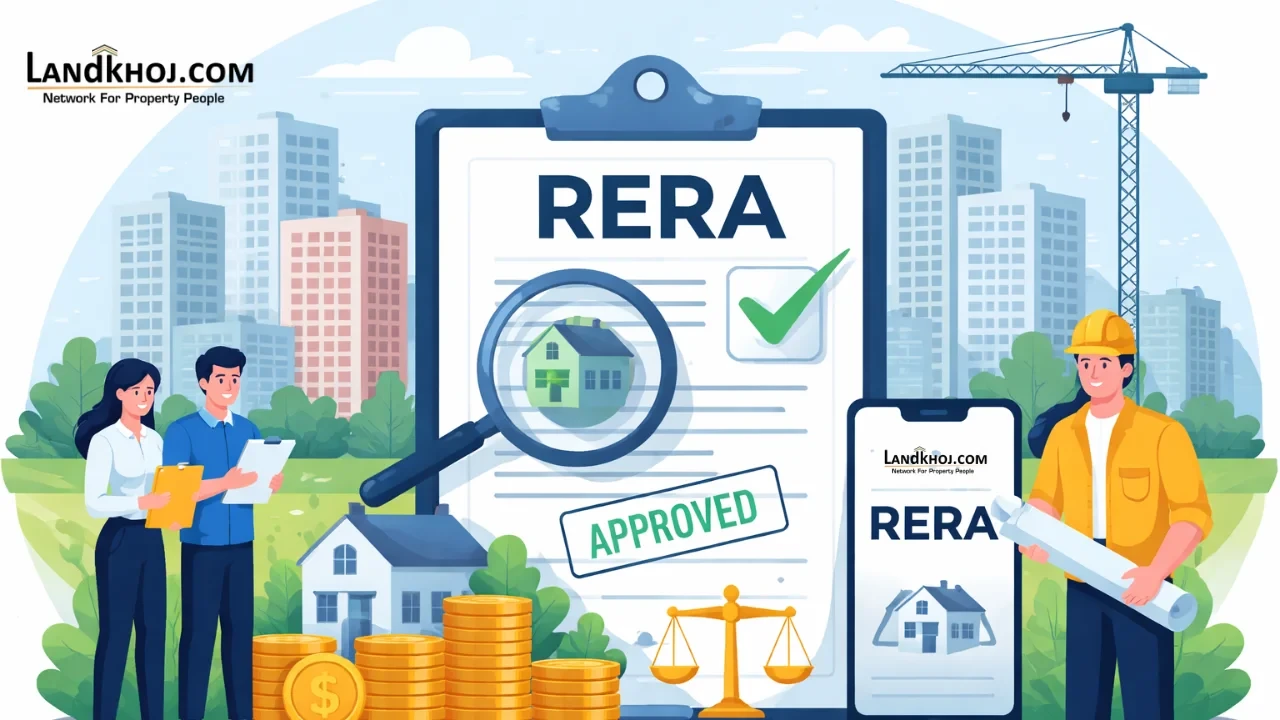
RERA Registration Process (Step By Step)
Index Table
- Introduction
- What is RERA & Why It Matters
- RERA Registration Process (Step-by-Step Guide)
- Documents Required for RERA Registration
- State-wise RERA Implementation in India
- Role of Regulatory Authorities
- Common Mistakes During RERA Registration
- Conclusion (Part 1 Wrap)
Introduction
The Indian real estate sector has historically been one of the most unregulated industries, often leaving buyers vulnerable to fraud, delays, and incomplete projects. Before the implementation of the Real Estate (Regulation and Development) Act (RERA), there was no standardized framework that ensured accountability from builders or developers. This resulted in multiple disputes, financial losses, and a lack of trust among homebuyers.
With the introduction of RERA, the entire landscape of property buying and selling has changed significantly. The act enforces strict guidelines that developers must follow, ensuring that buyers receive accurate information and timely delivery of projects. Platforms like Landkhoj (https://landkhoj.com/) are further enhancing this ecosystem by listing verified and RERA-compliant properties, making property search safer and more reliable.
This comprehensive guide will help you understand the rera registration process, its importance, and how it impacts both buyers and builders in India.
What is RERA & Why It Matters
RERA, or the Real Estate Regulatory Authority, was introduced in 2016 by the Government of India to regulate the real estate sector. Its primary objective is to protect the interests of homebuyers while ensuring that developers maintain transparency and accountability.
The significance of RERA lies in its ability to create a structured and trustworthy real estate environment. It mandates that all residential and commercial projects must be registered before being marketed or sold. This ensures that buyers have access to verified project details, including approvals, timelines, and financial information.
RERA also establishes a legal framework for dispute resolution, allowing buyers to file complaints against builders for delays, fraud, or contract violations. This has significantly improved buyer confidence and reduced the risk associated with property investments.
Key Highlights
- Mandatory project registration before sale
- Transparency in project details and pricing
- Legal protection for homebuyers
- Timely dispute resolution mechanism
In simple terms, RERA has transformed the real estate sector into a more organized, reliable, and buyer-friendly market.
RERA Registration Process (Step-by-Step Guide)
The rera registration process is one of the most critical aspects of the RERA framework. It ensures that only legally compliant and verified projects are introduced into the market. Developers must complete this process before advertising or selling any property.
The process begins with the developer registering on the respective state RERA portal. Each state in India has its own RERA authority, and developers must apply through the relevant website. Once registered, the developer must submit detailed information about the project, including land ownership documents, layout plans, approvals from local authorities, and financial disclosures.
After submission, the RERA authority reviews the application thoroughly. If all documents are valid and comply with regulations, the project is granted a unique RERA registration number. This number must be displayed in all advertisements and marketing materials.
Step-by-Step Process
- Visit the official state RERA portal
- Create a promoter account
- Fill in project details
- Upload required documents
- Pay registration fees
- Submit application for approval
- Receive RERA registration number
This structured process ensures transparency and prevents fraudulent projects from entering the market.
Documents Required for RERA Registration
The success of the rera registration process largely depends on the accuracy and completeness of the documents submitted by the developer. RERA requires a comprehensive set of documents to verify the authenticity and legality of a project.
Developers must provide proof of land ownership, including title deeds and legal clearances. Additionally, they need to submit approved building plans, layout maps, and details of project specifications. Financial documents, such as project cost estimates and funding sources, are also mandatory.
The authority may also require information about the developer’s previous projects, track record, and completion history. This helps in assessing the credibility of the builder and ensures that only reliable developers are allowed to operate.
Required Documents
- Land ownership and title documents
- Approved layout and building plans
- Government approvals and NOCs
- Project cost and financial details
- Builder’s past project records
Submitting accurate documents not only speeds up the approval process but also builds trust among potential buyers.
State-wise RERA Implementation in India
Although RERA is a central act, its implementation is carried out by individual states. Each state has its own RERA authority and portal, which oversees project registrations, complaints, and compliance.
For example, Maharashtra has MahaRERA, which is known for its strict implementation and transparency. Similarly, Uttar Pradesh, Haryana, and Delhi have their own RERA portals that provide access to project details and complaint mechanisms.
This state-wise implementation allows for better regulation based on regional requirements while maintaining the core principles of the RERA act. Buyers can visit their respective state RERA websites to verify project details and ensure compliance.
Examples of State RERA Authorities
- Maharashtra RERA
- UP RERA
- Haryana RERA
- Delhi RERA
Each authority plays a crucial role in maintaining transparency and accountability in the real estate sector.
Role of Regulatory Authorities
The Real Estate Regulatory Authority in each state is responsible for enforcing the provisions of the RERA act. These authorities ensure that developers comply with regulations and that buyers’ interests are protected.
They review project registrations, monitor construction progress, and handle complaints from buyers. In case of violations, the authority has the power to impose penalties, revoke registrations, or take legal action against developers.
The authority also maintains a public database of registered projects, which buyers can access to verify information. This level of transparency has significantly improved trust in the real estate market.
Key Responsibilities
- Approving project registrations
- Monitoring project progress
- Handling buyer complaints
- Enforcing penalties for violations
Common Mistakes During RERA Registration
Many developers face delays or rejections during the rera registration process due to common mistakes. These errors can lead to financial losses and project delays.
One of the most common mistakes is submitting incomplete or incorrect documents. Developers often fail to provide accurate land records or approvals, which leads to rejection. Another issue is the lack of proper financial disclosures, which raises concerns about project viability.
Additionally, some developers do not update project details regularly, which can result in penalties. It is essential for builders to follow all guidelines and ensure compliance to avoid such issues.
Common Errors
- Incomplete documentation
- Incorrect project details
- Lack of financial transparency
- Failure to update project status
Avoiding these mistakes can help developers complete the registration process smoothly and efficiently.
Index Table (Part 2)
- How to Check RERA Registration
- Importance of Verifying RERA Registration
- RERA Approved Projects Explained
- How to Identify Fake vs Genuine Projects
- RERA Rules for Builders (Detailed)
- Builder Compliance Requirements
- Penalties for Non-Compliance
How to Check RERA Registration Online
Understanding how to check rera registration is one of the most important steps before investing in any property. Many buyers skip this step and later face issues such as project delays, legal disputes, or fraud. RERA has made it extremely simple to verify project authenticity through official state portals.
To begin, a buyer needs to visit the official RERA website of the respective state where the project is located. Once on the website, there is usually a search option labeled “Registered Projects” or “Project Details.” By entering the project name, builder name, or registration number, users can access complete details including approvals, project status, timelines, and legal information.
This process ensures that buyers are not relying solely on builder promises but are verifying information from a government-backed source. Platforms like Landkhoj (https://landkhoj.com/) also simplify this process by listing only verified and RERA-compliant properties, reducing the effort required by buyers.
Steps to Check RERA Registration
- Visit the official state RERA website
- Navigate to “Registered Projects” section
- Enter project name or registration number
- Review project details and status
- Verify builder credentials
This simple verification step can save buyers from significant financial and legal risks.
Importance of Verifying RERA Registration
Many buyers underestimate the importance of verifying RERA registration before purchasing a property. However, this step is critical in ensuring that the project is legally approved and follows regulatory guidelines.
When a project is registered under RERA, it means that the developer has submitted all necessary documents, including land ownership proofs, approvals, and financial disclosures. This reduces the chances of fraud and ensures that the project is monitored by the regulatory authority.
Additionally, verified projects provide transparency in pricing, construction progress, and delivery timelines. Buyers can also track updates directly on the RERA portal, which adds an extra layer of security. Ignoring this step can lead to serious consequences, including investing in unauthorized or delayed projects.
Why Verification is Important
- Confirms legal approval of project
- Ensures transparency in project details
- Protects against fraud and scams
- Provides access to official project updates
Taking a few minutes to verify RERA registration can prevent years of stress and financial loss.
RERA Approved Projects Explained
RERA approved projects are those that have successfully completed the registration process and comply with all regulatory requirements. These projects are considered safe and reliable for investment because they are monitored by the RERA authority.
Such projects provide detailed disclosures, including layout plans, construction timelines, and financial information. Buyers can access this information through the RERA portal, ensuring complete transparency. Additionally, developers of RERA-approved projects are legally bound to deliver the project on time and as promised.
One of the biggest advantages of investing in RERA-approved projects is accountability. If a developer fails to meet obligations, buyers have the right to file complaints and seek compensation. Platforms like Landkhoj help users easily identify such projects, making property search more efficient and trustworthy.
Key Features of RERA Approved Projects
- Complete legal verification
- Transparent pricing and plans
- Defined project timelines
- Accountability of developers
Choosing RERA-approved projects significantly reduces investment risks.
How to Identify Fake vs Genuine Projects
With the growth of the real estate market, there are still instances of fake or misleading projects. Understanding how to differentiate between fake and genuine projects is essential for every buyer.
A genuine project will always have a valid RERA registration number, which can be verified on the official portal. It will also provide clear documentation, including approvals and project timelines. On the other hand, fake projects often lack proper documentation and may provide vague or misleading information.
Buyers should also be cautious of unrealistic promises, such as extremely low prices or guaranteed returns. These are often red flags. Using trusted platforms like Landkhoj (https://landkhoj.com/) can help avoid such risks, as they focus on verified listings.
Red Flags to Watch
- No RERA registration number
- Lack of proper documentation
- Unrealistic pricing or promises
- No official online presence
Being aware of these signs can help buyers make safer investment decisions.
RERA Rules for Builders (Detailed)
The rera rules for builders are designed to ensure accountability, transparency, and fairness in the real estate sector. These rules are mandatory for all developers and must be followed strictly.
One of the key rules is that builders must register their projects before advertising or selling any units. They are also required to provide accurate and complete information about the project, including layout plans, approvals, and timelines. Any changes to the project must be communicated to buyers and approved by the authority.
Another important rule is the maintenance of an escrow account, where 70% of the funds collected from buyers must be deposited. This ensures that the funds are used only for the construction of the project and not diverted elsewhere.
Key RERA Rules
- Mandatory project registration
- Accurate project disclosures
- Use of escrow account
- Timely project delivery
- No false advertising
These rules ensure that builders operate ethically and responsibly.
Builder Compliance Requirements
Compliance with RERA regulations is essential for builders to operate legally. Developers must regularly update project details on the RERA portal, including construction progress and financial status.
They are also required to adhere to the timelines specified during registration. Any delay must be justified, and buyers may be entitled to compensation. Builders must also ensure that all agreements with buyers are fair and transparent.
Failure to comply with these requirements can result in penalties, including fines or cancellation of project registration. This strict compliance framework has significantly improved the quality and reliability of real estate projects in India.
Compliance Checklist
- Regular project updates
- Adherence to timelines
- Transparent agreements
- Proper fund utilization
Following these requirements helps maintain trust and credibility in the market.
Penalties for Non-Compliance
RERA has strict provisions for penalizing builders who fail to comply with its regulations. These penalties are designed to discourage unethical practices and protect buyers.
New projects to explore
View all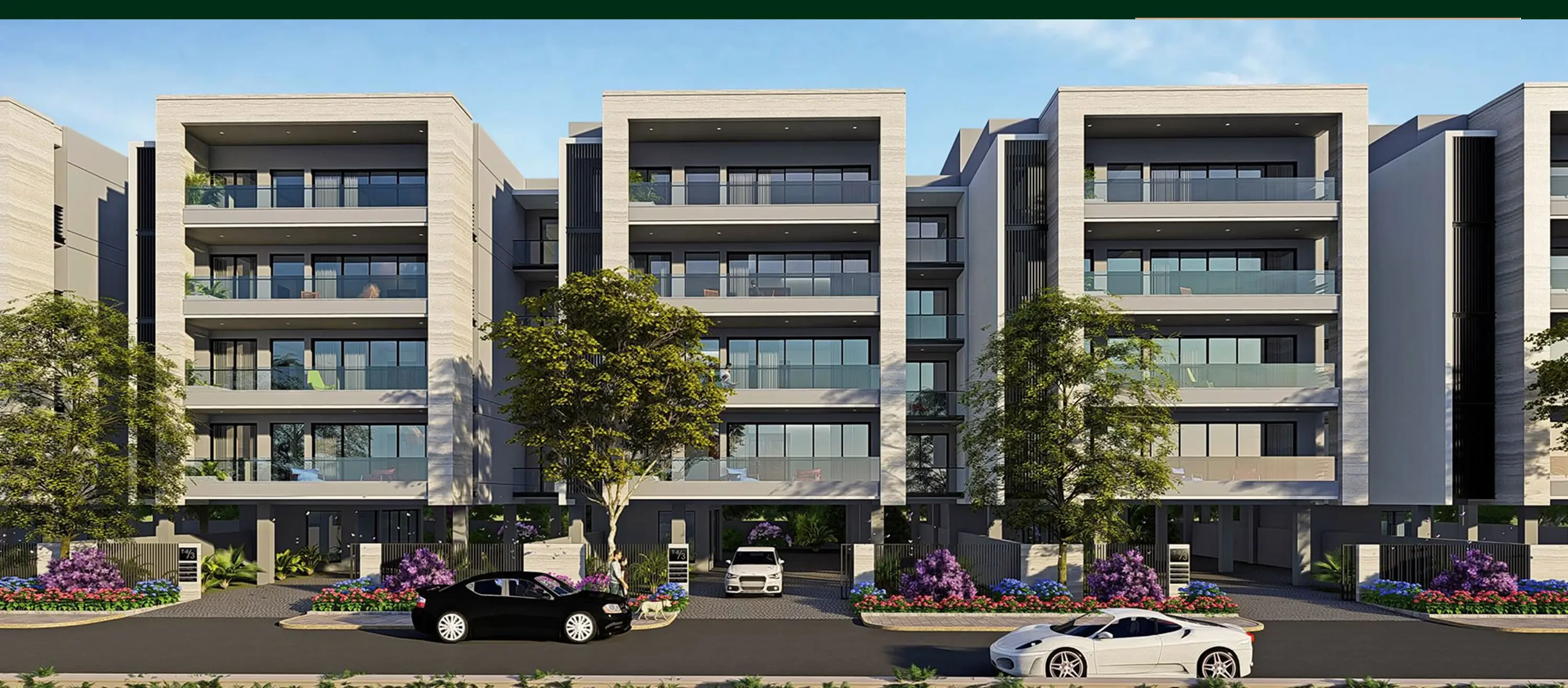 Under Construction
4
Under Construction
4

DLF Garden City Floors
Sector 93, Gurugram, Gurgaon, Haryana
Price
₹1.25 Cr
 Recent Launch
5
Recent Launch
5

Taj Wellington Mews
Price
₹27 Lac
 Ready to Move

Shanti Sadan
Bapu Nagar, Jaipur, Jaipur, Rajasthan
Price
₹2.1 Cr
Properties to explore
View all

If a builder does not register a project, they can face heavy fines, which may extend up to 10% of the project cost. In severe cases, imprisonment may also be imposed. Similarly, delays in project completion can result in compensation to buyers.
Misleading advertisements or false information can also attract penalties. This strict enforcement ensures that builders remain accountable and maintain high standards.
Types of Penalties
- Financial penalties
- Project registration cancellation
- Compensation to buyers
- Legal action or imprisonment
These measures have made the real estate sector more disciplined and trustworthy.
Index Table (Part 3 Focus)
- Benefits of RERA for Buyers
- Financial Security Under RERA
- Legal Protection for Homebuyers
- Transparency and Accountability in Projects
- RERA Act Benefits in Real Estate
- Impact of RERA on Property Investment
- Buyer Rights Under RERA
Benefits of RERA for Buyers
The benefits of rera for buyers have significantly transformed the real estate experience in India. Before RERA, buyers often faced issues such as delayed possession, hidden charges, and lack of transparency. With the implementation of this act, buyers now enjoy a more secure and reliable environment when investing in property.
One of the biggest advantages is access to verified project information. Buyers can check project details, approvals, and timelines before making a decision. This reduces dependency on builders and minimizes the chances of fraud. Additionally, RERA ensures that developers cannot make false promises or misleading advertisements.
Platforms like Landkhoj (https://landkhoj.com/) further enhance this experience by providing access to RERA-compliant listings, helping buyers make informed decisions without unnecessary risks.
Key Benefits
- Verified project information
- Protection against fraud
- Transparency in pricing
- Reduced risk in investment
These benefits make property buying safer and more structured.
Financial Security Under RERA
Financial security is one of the most important aspects of the RERA framework. Buyers invest their life savings into property, and RERA ensures that this investment is protected.
Under RERA, developers are required to deposit 70% of the funds collected from buyers into a separate escrow account. This ensures that the money is used only for the construction of the project and not diverted to other ventures. This rule significantly reduces the chances of project delays due to financial mismanagement.
Additionally, buyers are protected from hidden charges and unexpected costs. All pricing details must be clearly disclosed at the time of purchase. This level of financial transparency builds trust and confidence among buyers.
Financial Safeguards
- Escrow account for project funds
- No hidden charges
- Transparent pricing structure
- Protection from fund diversion
These measures ensure that buyers’ investments remain secure.
Legal Protection for Homebuyers
RERA provides strong legal protection for homebuyers, ensuring that their rights are safeguarded throughout the property buying process. Buyers now have the right to receive accurate information and timely delivery of projects.
If a developer fails to deliver the project on time, buyers are entitled to compensation. They can also withdraw from the project and claim a refund with interest. This legal backing gives buyers confidence and reduces the fear associated with real estate investments.
Moreover, RERA has established a dedicated authority to handle disputes. This ensures that complaints are resolved quickly and efficiently, without the need for lengthy legal procedures.
Legal Rights
- Right to timely possession
- Right to accurate information
- Right to compensation
- Right to file complaints
These protections empower buyers and create a fair real estate environment.
Transparency and Accountability in Projects
Transparency is one of the core principles of RERA. Developers are required to provide complete project details, including layout plans, approvals, and timelines. This information must be updated regularly on the RERA portal.
This level of transparency ensures that buyers are fully informed before making a decision. It also holds developers accountable for their commitments. Any deviation from the approved plan must be communicated to buyers and approved by the authority.
Accountability is further enforced through strict penalties for non-compliance. Developers who fail to meet their obligations can face fines or legal action. This has significantly improved the quality and reliability of real estate projects.
Transparency Features
- Public access to project details
- Regular updates on progress
- Clear communication from developers
- Strict accountability measures
These features create a trustworthy environment for buyers.
RERA Act Benefits in Real Estate
The rera act benefits extend beyond individual buyers and impact the entire real estate ecosystem. The act has brought discipline and structure to an otherwise unorganized sector.
One of the major benefits is increased investor confidence. With clear regulations and transparency, more people are willing to invest in real estate. This has led to steady growth in the sector.
The act has also improved the quality of construction and project management. Developers are now more cautious and focused on delivering projects on time. This has resulted in better infrastructure and higher standards.
Industry-Level Benefits
- Increased investor confidence
- Improved project quality
- Standardized practices
- Reduced fraud cases
RERA has played a crucial role in transforming the real estate industry.
Impact of RERA on Property Investment
RERA has had a significant impact on property investment patterns in India. Buyers are now more informed and cautious, leading to more rational investment decisions.
The act has reduced speculative investments and encouraged genuine buyers to enter the market. This has created a more stable and sustainable real estate environment. Investors now prefer RERA-approved projects, as they offer greater security and transparency.
Additionally, the availability of online information through RERA portals has made it easier for buyers to compare projects and make informed choices. Platforms like Landkhoj (https://landkhoj.com/) further simplify this process by providing curated and verified property listings.
Investment Impact
- Safer investment environment
- Increased buyer confidence
- Reduced speculative buying
- Better decision-making
These changes have made real estate investment more reliable.
Buyer Rights Under RERA
RERA has clearly defined the rights of buyers, ensuring that they are protected at every stage of the property transaction. These rights empower buyers and create a balanced relationship between buyers and developers.
Buyers have the right to access complete project information, including approvals and timelines. They also have the right to timely possession and compensation in case of delays. Additionally, buyers can file complaints against developers for any violations.
These rights ensure that buyers are not at the mercy of developers and can take legal action if necessary. This has significantly improved trust in the real estate market.
Buyer Rights
- Access to project information
- Timely delivery of property
- Compensation for delays
- Right to legal action
These rights form the foundation of a fair and transparent real estate system.
Index Table (Part 4 )
- RERA Website India Overview
- How to Use RERA Portal Effectively
- How to File Complaint in RERA
- Documents Required for Filing Complaint
- How to Complaint in RERA (Step-by-Step Guide)
- How to Complaint in RERA Against Builder
- Complaint Resolution Process
- Conclusion (Part 4 Wrap)
RERA Website India Overview
The rera website india plays a crucial role in maintaining transparency and accessibility in the real estate sector. Each state in India operates its own RERA portal, where buyers, investors, and developers can access essential information related to property projects, builder registrations, and legal updates.
These websites act as a centralized platform where all registered projects are listed with complete details such as approvals, timelines, and current status. Buyers can easily verify whether a project is legally approved before making any investment decision. This accessibility has significantly reduced dependency on third-party sources and increased trust in the system.
Additionally, these portals allow users to file complaints, track case status, and access important notifications issued by regulatory authorities. Platforms like Landkhoj (https://landkhoj.com/) complement these official websites by helping users discover RERA-compliant properties more conveniently.
Important RERA Websites
- Central Advisory Portal: https://rera.gov.in/
- Maharashtra RERA: https://maharera.mahaonline.gov.in/
- Uttar Pradesh RERA: https://www.up-rera.in/
- Haryana RERA: https://haryanarera.gov.in/
- Delhi RERA: https://rera.delhi.gov.in/
These portals ensure that users have direct access to verified and government-approved information.
How to Use RERA Portal Effectively
Understanding how to use the RERA portal effectively can save buyers time and help them make informed decisions. The portal is designed to be user-friendly, but knowing the right steps can enhance the experience.
Users can search for projects using various filters such as project name, builder name, or registration number. The portal provides detailed insights, including project progress, approvals, and financial disclosures. This allows buyers to compare multiple projects and choose the best option.
Additionally, users can track updates related to ongoing projects and monitor any changes in timelines or plans. This level of transparency ensures that buyers remain informed throughout the property lifecycle.
Key Features of RERA Portal
- Search registered projects
- View builder details
- Access project documents
- Track construction progress
- File complaints online
Using these features effectively can help buyers avoid risks and make better investment decisions.
How to File Complaint in RERA
Knowing how to file complaint in rera is essential for buyers who face issues such as project delays, false promises, or contractual violations. RERA provides a structured and transparent mechanism for resolving disputes.
To file a complaint, users need to visit the official RERA website of their respective state. After registering on the portal, they can access the complaint section and fill out the required details. This includes information about the project, builder, and nature of the complaint.
Once the form is submitted along with supporting documents and the applicable fee, the RERA authority reviews the case and initiates the resolution process. This system ensures that buyers have a reliable platform to address their concerns.
Steps to File Complaint
- Visit state RERA portal
- Register or log in
- Fill complaint form
- Upload necessary documents
- Pay applicable fees
- Submit application
This process is designed to be simple and accessible for all users.
Documents Required for Filing Complaint
When filing a complaint under RERA, it is important to provide accurate and complete documentation. This helps the authority understand the issue and take appropriate action.
Buyers must submit proof of property purchase, such as booking receipts or agreement documents. Additionally, any communication with the builder, including emails or messages, should be included as evidence. Payment receipts and bank statements are also important to establish financial transactions.
Providing detailed and organized documentation increases the chances of a favorable outcome and speeds up the resolution process.
Required Documents
- Booking or allotment letter
- Sale agreement copy
- Payment receipts
- Communication records with builder
- Identity proof
Proper documentation strengthens the complaint and ensures faster resolution.
How to Complaint in RERA (Step-by-Step Guide)
If you are wondering how to complaint in rera, the process is straightforward and designed for ease of use. RERA aims to provide a hassle-free complaint mechanism for buyers.
First, the user must log in to the RERA portal and navigate to the complaint section. They need to provide detailed information about the issue, including project name, builder details, and nature of the complaint. Supporting documents must be uploaded to validate the claim.
After submission, the authority reviews the complaint and schedules a hearing if necessary. Buyers can track the status of their complaint online, ensuring transparency throughout the process.
Step-by-Step Process
- Log in to RERA portal
- Select complaint section
- Enter complaint details
- Upload supporting documents
- Submit application
This structured approach ensures that complaints are handled efficiently.
How to Complaint in RERA Against Builder
Understanding how to complaint in rera against builder is crucial when facing serious issues such as project delays, fraud, or breach of contract. RERA empowers buyers to take action against developers who fail to meet their obligations.
Buyers can file complaints if the builder does not deliver the project on time, changes the project layout without consent, or imposes hidden charges. The complaint must include all relevant details and supporting documents to establish the claim.
Once the complaint is filed, the RERA authority investigates the matter and may impose penalties on the builder. In some cases, buyers may also receive compensation or refunds.
Common Reasons for Complaints
- Delay in project completion
- Misleading advertisements
- Changes in project plans
- Hidden charges
Taking timely action can help buyers protect their rights and investments.
Complaint Resolution Process
The complaint resolution process under RERA is designed to be efficient and time-bound. Once a complaint is filed, the authority reviews the case and may schedule a hearing involving both parties.
During the hearing, both the buyer and the builder present their arguments and evidence. The authority then evaluates the case and passes a judgment based on the facts. This may include penalties, compensation, or directives to complete the project.
One of the key advantages of RERA is that it aims to resolve disputes within a fixed timeframe, usually around 60 days. This ensures that buyers do not have to go through lengthy legal procedures.
Resolution Steps
- Complaint review by authority
- Hearing scheduled
- Evaluation of evidence
- Final judgment issued
This process ensures fairness and transparency in dispute resolution.
Index Table (Part 5 Focus)
- Advanced Buyer Tips for RERA-Compliant Investment
- Common Buyer Mistakes to Avoid
- How Landkhoj Helps in Smart Property Decisions
- Future of RERA in India
- Final Conclusion
- FAQs (Advanced & Unique)
Advanced Buyer Tips for RERA-Compliant Investment
In today’s competitive real estate market, simply knowing about RERA is not enough. Buyers need to apply strategic thinking while investing in property to maximize returns and minimize risks. A smart investor always combines legal awareness with market research to make the best decision.
One of the most effective strategies is to always prioritize RERA-approved properties. These projects offer transparency, accountability, and legal protection. Additionally, buyers should carefully review project timelines, builder reputation, and location growth potential before making a purchase.
Another important tip is to diversify investment rather than putting all funds into a single property. This reduces risk and increases the chances of better returns. Using trusted platforms like Landkhoj (https://landkhoj.com/) can simplify this process by providing verified listings and detailed property insights.
Smart Investment Tips
- Always choose RERA-registered projects
- Verify builder track record
- Analyze location growth potential
- Compare multiple projects before investing
- Use trusted platforms like Landkhoj
Applying these strategies can significantly improve investment outcomes.
Common Buyer Mistakes to Avoid
Even with RERA in place, many buyers still make avoidable mistakes that can lead to financial losses. Understanding these mistakes is essential for making informed decisions.
One common mistake is not verifying project details on the RERA portal. Buyers often rely solely on advertisements or builder promises, which can be misleading. Another mistake is ignoring the fine print in agreements, which may include hidden clauses or unfavorable terms.
Buyers also tend to rush decisions due to limited-time offers or discounts. This can result in investing in unsuitable or risky projects. Proper research and patience are key to avoiding such pitfalls.
Mistakes to Avoid
- Skipping RERA verification
- Ignoring legal documentation
- Falling for unrealistic offers
- Not comparing multiple options
Avoiding these mistakes can help buyers make safer and smarter investments.
How Landkhoj Helps in Smart Property Decisions
Landkhoj (https://landkhoj.com/) has emerged as a reliable platform for property buyers looking for verified and trustworthy listings. In a market where misinformation is common, having a platform that focuses on transparency is extremely valuable.
Landkhoj simplifies the property search process by offering RERA-compliant listings, detailed project information, and easy comparison tools. Buyers can filter properties based on location, budget, and project status, making it easier to find the right investment opportunity.
The platform also helps users stay updated with the latest market trends and property insights. This ensures that buyers are well-informed and can make confident decisions.
Why Landkhoj Stands Out
- Verified property listings
- Focus on RERA-compliant projects
- Easy comparison tools
- User-friendly interface
- Reliable and updated information
Using Landkhoj can significantly enhance the property buying experience.
Future of RERA in India
The future of RERA in India looks promising as the real estate sector continues to evolve. The act has already brought significant improvements in transparency and accountability, and further enhancements are expected in the coming years.
With increasing digitalization, RERA portals are becoming more advanced and user-friendly. This will make it even easier for buyers to access information and file complaints. Additionally, stricter enforcement of rules is likely to further reduce fraudulent practices.
The growing awareness among buyers is also contributing to a more disciplined market. As more people choose RERA-approved projects, developers are compelled to maintain high standards and deliver quality projects.
Future Trends
- Increased digital integration
- Stronger enforcement of rules
- Higher buyer awareness
- Improved project quality
These developments will continue to strengthen the real estate sector.
Final Conclusion
The implementation of RERA has revolutionized the Indian real estate industry by introducing transparency, accountability, and buyer protection. From understanding the rera registration process to learning how to file complaint in rera, every aspect of this framework is designed to safeguard consumer interests.
For buyers, the benefits of rera for buyers and overall benefits of rera are immense, ranging from financial security to legal protection. For developers, it has created a structured environment that promotes ethical practices and long-term growth.
By combining the power of RERA with reliable platforms like Landkhoj (https://landkhoj.com/), buyers can make informed and secure property investments. Whether you are a first-time buyer or an experienced investor, understanding RERA is essential for success in today’s real estate market.
-
What is the RERA registration process in India?
The RERA registration process requires builders to register their real estate projects on the official state RERA portal by submitting legal documents, approvals, and financial details. Once verified, a unique registration number is issued.
-
How to check RERA registration of a project?
You can check RERA registration by visiting your state RERA website, searching the project name or registration number, and reviewing details like approvals, builder information, and project status.
-
What are RERA approved projects?
RERA approved projects are those that are officially registered with the RERA authority and comply with all legal, financial, and construction guidelines, making them safer for buyers.
-
What are the RERA rules for builders?
RERA rules require builders to register projects, provide accurate information, maintain an escrow account for funds, and deliver projects within the promised timeline without misleading buyers.
-
What are the benefits of RERA for buyers?
The benefits of RERA for buyers include transparency in pricing, legal protection, timely delivery of projects, and the ability to file complaints against builders in case of issues.
-
What are the major RERA act benefits?
The RERA act benefits include improved trust in real estate, standardized practices, reduced fraud, better project quality, and enhanced investor confidence.
-
Which is the official RERA website in India?
The central RERA website is https://rera.gov.in/, and each state has its own portal like UP RERA, MahaRERA, Haryana RERA, and Delhi RERA for project details and complaints.
-
How to file complaint in RERA?
To file complaint in RERA, visit the state RERA website, register/login, fill the complaint form, upload documents, pay fees, and submit the application online.
-
How to complaint in RERA step by step?
Login to the RERA portal, go to the complaint section, enter project and builder details, attach supporting documents, and submit your complaint for review.
-
How to complaint in RERA against builder?
You can complaint in RERA against builder for delays, fraud, or contract violations by submitting a complaint with proof on the RERA portal. The authority may impose penalties or provide compensation.
-
Can I get compensation if my project is delayed under RERA?
Yes, under RERA, buyers are entitled to compensation or interest if the builder fails to deliver the project on time as promised.
-
Is RERA mandatory for all real estate projects?
Yes, most residential and commercial projects must be registered under RERA before being marketed or sold, except for very small projects as defined by the law.