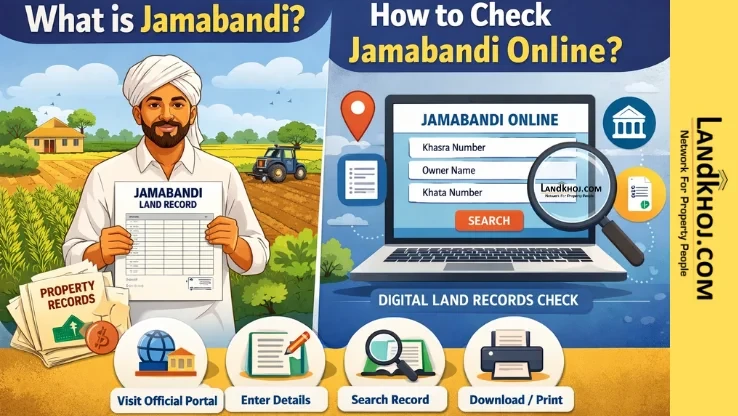
You Know About : What is Jamabandi?
Index Table
| No. | Questions Covered |
|---|---|
| 1 | What is Jamabandi? |
| 2 | What is Jamabandi in Property? |
| 3 | Is Jamabandi a Public Document? |
| 4 | What is the Importance of Jamabandi? |
| 5 | What are the Benefits of Jamabandi? |
1. What is Jamabandi?
Jamabandi is an official land record document maintained by the revenue department in India, which contains complete details about land ownership, cultivation, and rights. It is commonly referred to as the Record of Rights (RoR) and serves as a legal proof of ownership for agricultural and sometimes residential land. Jamabandi is updated periodically, usually every four to five years, ensuring that all ownership changes, transfers, or mutations are accurately recorded. This document plays a critical role in property verification, legal disputes, and financial transactions. Whether you are a buyer, seller, or landowner, understanding Jamabandi is essential to ensure transparency and legal security in land dealings.
Key Highlights of Jamabandi:
- Acts as official proof of land ownership
- Maintained by the government revenue department
- Updated periodically for accuracy
- Used in legal disputes as evidence
- Available online as Jamabandi Bhulekh
2. What is Jamabandi in Property?
In the context of property, Jamabandi is a comprehensive legal record that defines ownership and usage details of land. It includes crucial information such as the owner’s name, Jamabandi Khasra number, Khata or Khatauni number, land classification, and revenue details. This makes it an essential document during property transactions, as it helps verify whether the seller has legal rights over the property. Jamabandi ensures that buyers are protected from fraudulent deals and unclear ownership claims. In real estate, it acts as the backbone of due diligence, helping investors and individuals make informed decisions before purchasing land or property.
New projects to explore
View all On Going Projects

MANOR ONE
Sector 111, Sector 111, Gurugram
Price
₹1.89 Cr
 Under Construction

Signature Daxin
Sector 36, Gurugram, Gurgaon, Haryana
Price
₹2 Cr
 Under Construction

Ashiana Amantran Phase III
Bhakrota, Jaipur, Jaipur, Rajasthan
Price
₹70.91 Lac
Properties to explore
View all


Jamabandi Property Details Include:
- Owner’s name (Malik)
- Jamabandi Khasra number
- Jamabandi Khata / Khatauni
- Land area and classification
- Revenue (tax) details
- Cultivation and usage information
3. Is Jamabandi a Public Document?
Yes, Jamabandi is considered a public document under Indian land revenue laws, meaning it can be accessed by any individual. This openness is designed to ensure transparency in land ownership and reduce disputes or fraudulent transactions. With the digitization of land records, Jamabandi Bhulekh is now available online through official government portals, allowing users to easily check details using information like Khasra number, owner name, or Khata number. Because it is publicly accessible, Jamabandi plays a significant role in promoting trust and accountability in property dealings across India.
Why Jamabandi is Public:
- Ensures transparency in land ownership
- Helps prevent fraud and illegal claims
- Allows easy verification for buyers
- Maintains government accountability
- Provides equal access to land information
4. What is the Importance of Jamabandi?
Jamabandi holds immense importance in both legal and practical aspects of land ownership in India. It serves as a primary document for establishing ownership rights and resolving disputes. Without a valid Jamabandi record, it becomes difficult to prove ownership in court or carry out legal transactions. Additionally, it is required for mutation processes, where ownership changes are officially recorded after sale, inheritance, or gifting. Financial institutions also rely on Jamabandi when approving loans against land or property. Overall, it ensures that land records remain clear, updated, and legally valid.
Importance of Jamabandi:
- Acts as legal proof of ownership
- Required for property transactions
- Essential for mutation processes
- Needed for bank loans and mortgages
- Helps resolve land disputes
5. What are the Benefits of Jamabandi?
Jamabandi offers multiple benefits that make it a crucial document for landowners, buyers, and investors. It provides clarity, security, and transparency in land ownership, reducing the chances of disputes and fraud. With the availability of Jamabandi online, accessing land records has become faster and more convenient. It also helps individuals avail government schemes, subsidies, and financial assistance related to land and agriculture. By maintaining accurate and updated records, Jamabandi ensures smooth property transactions and legal compliance.
Benefits of Jamabandi:
- Provides clear ownership records
- Prevents property fraud
- Enables easy online verification
- Supports loan approvals
- Helps in availing government schemes
-
What is Jamabandi?
Jamabandi is an official land record that shows ownership, cultivation, and revenue details of a property.
-
What is Jamabandi in property?
Jamabandi is a legal document that confirms who owns a land and how it is being used.
-
Is Jamabandi a public document?
Yes, Jamabandi is a public document and can be accessed by anyone through government portals.
-
Why is Jamabandi important?
Jamabandi is important because it acts as legal proof of land ownership and helps in property transactions.
-
What are the benefits of Jamabandi?
Jamabandi provides ownership clarity, prevents fraud, and helps in getting loans and government benefits.
-
How often is Jamabandi updated?
Jamabandi is usually updated every 4–5 years or after ownership changes (mutation).
-
Can Jamabandi be used in court?
Yes, Jamabandi is legally valid and can be used as evidence in land disputes.
-
What details are included in Jamabandi?
It includes owner name, khasra number, khata number, land type, and revenue details.